
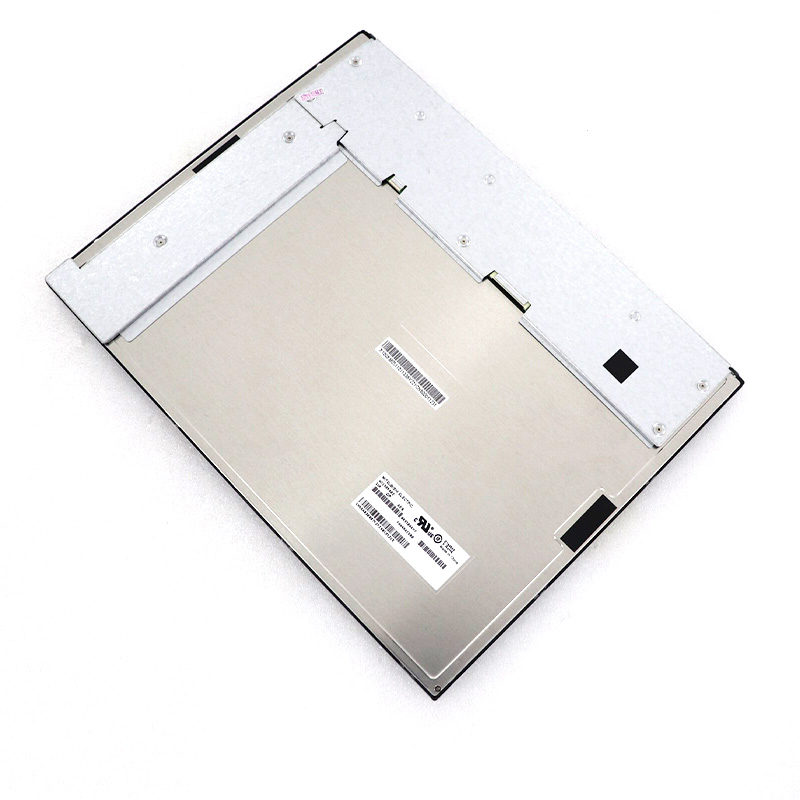
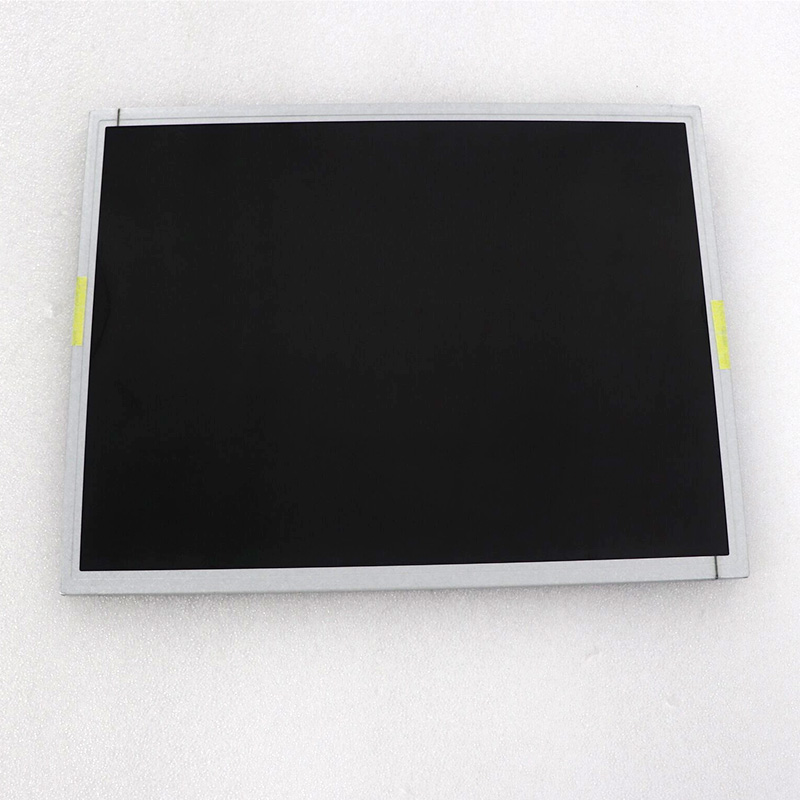
AC150XA02 15 INCH 1024*768 MITSUBISHI DISPLAY
In the ever-evolving landscape of display technology, where 4K and OLED dominate headlines, there exists a category of industrial-grade components whose value is measured not in pixel density, but in unwavering reliability and specialized performance. The AC150XA02 15-inch 1024x768 Mitsubishi Display module stands as a quintessential example of this breed. This article delves deep into this specific LCD panel, moving beyond basic specifications to explore its technological DNA, its intended industrial ecosystem, and the critical reasons for its continued relevance.
Far from a consumer monitor, the AC150XA02 is a core component engineered for mission-critical applications where failure is not an option. We will unpack its defining characteristics—from its unique XGA resolution and ruggedized construction to its specific interface and backlighting technology. This exploration is not merely a product review; it is an analysis of a solution designed for environments where consistency, longevity, and readability under duress trump the need for cinematic color. Understanding this display is to understand a fundamental pillar of industrial human-machine interface (HMI) design.
Decoding the Model: AC150XA02 Specifications and Heritage
The alphanumeric code AC150XA02 is a direct map to the panel's identity. "AC" typically denotes an Advanced Color or ACP (Advanced Color Pure) series, hinting at Mitsubishi's focus on stable color performance. "150" refers to the 15-inch diagonal screen size. "X" is crucial, indicating an XGA (1024 x 768 pixels) resolution with a 4:3 aspect ratio. This squarish format, once the standard for early PCs, remains vital in industrial settings for displaying multiple data points, legacy system interfaces, and control panels without wasteful black bars.
The module utilizes a Twisted Nematic (TN) LCD technology, chosen not for wide viewing angles but for its fast response times, high brightness potential, and proven reliability over extended operational lifetimes. With a brightness often reaching 400-450 nits, it combats ambient glare in factories or outdoor kiosks. The 02 suffix points to specific revision details, often concerning the backlight type—frequently a high-durability CCFL (Cold Cathode Fluorescent Lamp) in this generation, known for its consistent output and linear dimming characteristics critical for 24/7 operation.
The Industrial Ecosystem: Primary Applications and Use Cases
The AC150XA02 finds its home in environments where commercial displays would swiftly falter. Its primary domain is Industrial Human-Machine Interfaces (HMIs) for factory automation, process control systems, and manufacturing machinery. Here, it serves as the visual conduit between operators and complex systems, displaying real-time metrics, schematic diagrams, and control buttons.
Beyond the factory floor, it is integral to medical diagnostic equipment (like ultrasound or patient monitors where grayscale clarity is key), transportation and aviation information displays, and point-of-sale/point-of-information terminals. In these roles, the display is valued for its ability to operate continuously in temperature-variable, high-vibration, and dusty environments. Its 4:3 aspect ratio is often a perfect fit for legacy software and diagnostic interfaces that were never designed for widescreens, ensuring full-screen, non-distorted visualization.
XGA Resolution in the Modern Era: A Legacy Advantage
In a world of Ultra High Definition, 1024x768 (XGA) may seem anachronistic. However, in industrial contexts, this "legacy" resolution confers significant advantages. First is system compatibility and lower computational overhead. Many embedded systems, PLCs (Programmable Logic Controllers), and single-board computers can drive XGA natively without powerful graphics processors, reducing system cost, complexity, and heat generation.
Second is pixel density and readability. On a 15-inch screen, XGA offers a balanced pixel pitch where individual elements—text, icons, lines on a graph—are rendered with sufficient clarity without being too small for an operator to read from a distance. This is critical for safety and efficiency. Furthermore, the 4:3 aspect ratio provides more vertical space than a widescreen 16:9 format at the same diagonal size, allowing for better display of lists, data logs, and vertical process flow diagrams.
Critical Technical Deep Dive: Backlight, Interface, and Durability
The performance pillars of the AC150XA02 are its backlight, interface, and built-in ruggedness. The CCFL backlight, while less energy-efficient than modern LEDs, offers superior uniformity across the screen and excellent performance across a wide temperature range. Its light output degrades predictably over time, allowing for proactive maintenance scheduling in critical systems.
The standard interface is LVDS (Low-Voltage Differential Signaling), a robust, noise-resistant digital interface that became the industry standard for connecting panels to controller boards over longer cables within devices. Durability features are intrinsic, not added: the panel is designed to withstand extended temperature ranges (often 0°C to 50°C or broader), higher humidity, and sustained vibration. The polarizer is often treated for anti-glare, and the entire assembly is built to resist the ingress of dust.
Integration and Replacement Considerations
Integrating or replacing an AC150XA02 is a task for system engineers, not end-users. It is a bare LCD panel, requiring a compatible LVDS controller board, a power supply for both the logic and the backlight inverter, and a meticulously fitted mechanical bezel. When sourcing a replacement, one must match not just the size and resolution, but the exact pinout, voltage requirements, and backlight connector type.
With CCFL backlights eventually dimming after tens of thousands of hours, a common consideration is retrofit LED backlighting kits. These can extend the panel's life significantly, offering lower power consumption and instant-on capability, but require careful installation to maintain brightness uniformity and avoid interference. Understanding the optical structure (light guide plate, diffusers) is essential for such upgrades.
The Future Niche: Sustainability and Long-Term Support
The story of the AC150XA02 is also one of industrial sustainability. The long lifecycle of industrial equipment (10-20 years) creates a sustained demand for compatible, reliable replacement parts long after consumer models are obsolete. This panel exemplifies the long-tail support model in electronics, where availability from specialized distributors prevents the costly redesign of entire systems.
While newer panels with LED backlights and wider viewing angle technologies (like IPS) are available in similar form factors, the AC150XA02 maintains its niche. Its future lies in the continued operation of the vast installed base of equipment it serves. For engineers, the lesson is in designing for longevity and understanding that in industrial design, the "latest" is not always the "greatest"; the most appropriate technology is the one that guarantees performance for the lifetime of the host machine.
FAQs:
AC150XA02 15-Inch Mitsubishi Display
1. What is the AC150XA02? It is a 15-inch industrial LCD panel with XGA (1024x768) resolution, manufactured by Mitsubishi, typically using TN technology and CCFL backlighting.
2. What does "XGA" mean? XGA stands for Extended Graphics Array, a display resolution of 1024 pixels horizontally by 768 pixels vertically with a 4:3 aspect ratio.
3. Where is this display commonly used? In industrial HMIs, medical devices, POS/POI systems, transportation info displays, and any application requiring a rugged, reliable 4:3 format display.
4. Is this a standalone monitor? No. It is a bare LCD module requiring an external LVDS controller board, power supply, and mechanical integration to function.
5. What is the main advantage of the 4:3 aspect ratio? It optimally displays legacy software interfaces and provides more vertical screen real estate for data lists, control panels, and diagnostic readouts.
6. Can I replace the CCFL backlight with an LED? Yes, via retrofit kits, but it requires technical skill to ensure proper light uniformity and electrical compatibility.
7. What interface does it use? It primarily uses an LVDS (Low-Voltage Differential Signaling) interface for robust, noise-resistant data transmission from the controller.
8. Why choose this over a newer, higher-resolution panel? For system compatibility, lower computational load, readability at distance, and direct replacement in existing equipment without redesign.
9. What are key specs to verify when replacing it? Exact physical dimensions, LVDS pinout, backlight connector type, voltage requirements, and interface timing.
10. Is the AC150XA02 still being manufactured? It is likely in end-of-life or limited production, but remains available through specialized industrial electronic component distributors.
Conclusion
The AC150XA02 is far more than a simple collection of glass and circuitry; it is a testament to a design philosophy where reliability, longevity, and suitability for purpose are paramount. In an age of rapid technological obsolescence, this display module represents the enduring backbone of countless critical systems worldwide. Its XGA resolution and 4:3 aspect ratio, often viewed as legacy, are in fact precisely calibrated for the industrial and professional environments it serves.
For engineers, integrators, and procurement specialists, understanding the nuances of such components—from the CCFL backlight's predictable aging to the LVDS interface's robustness—is crucial for maintaining operational continuity. The AC150XA02 reminds us that true technological sophistication is not always about the highest number of pixels, but about the intelligent application of the right technology to solve a specific, demanding problem for years on end.
Media Contact
Company Name: Yingi Technology
Email:Send Email
Country: China
Website: https://www.invshop.com/

