
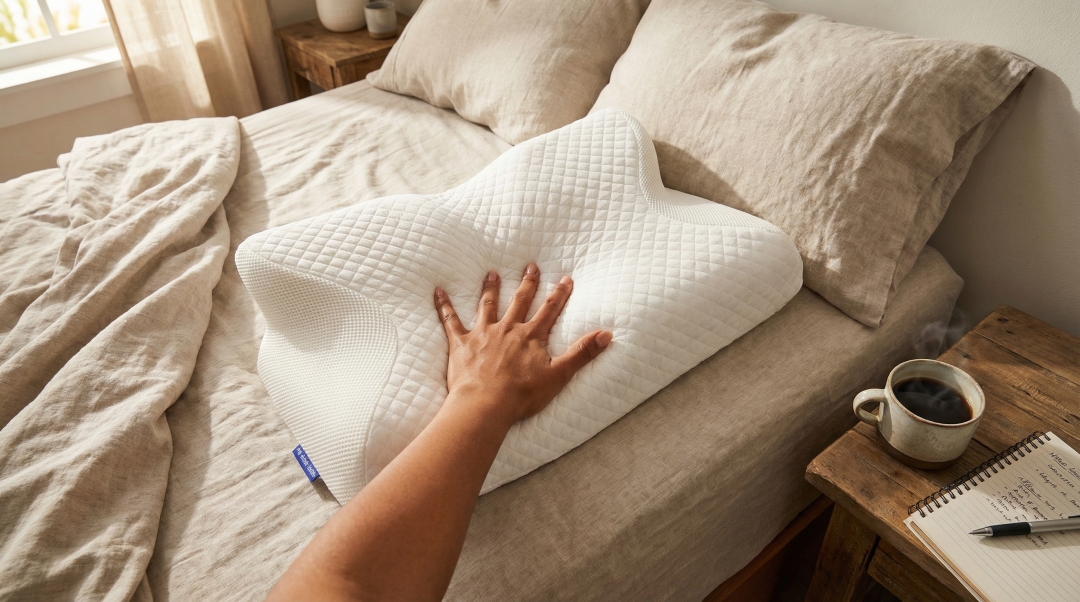
NEW YORK, NY - February 10, 2026 - A comprehensive market analysis conducted by sleep health researchers has identified significant shifts in the cervical pillow industry, with emerging brands challenging established players through superior clinical design and competitive pricing strategies. The report, which evaluated 34 cervical support pillows currently available to consumers, reveals that innovation in memory foam density and ergonomic engineering is driving a new generation of products that outperform legacy brands at a fraction of their price points.
The global orthopedic pillow market, valued at 4.2 billion in 2025, is projected to reach 6.8 billion by 2030, driven primarily by increasing rates of cervical spine disorders, the proliferation of "tech neck" among digital device users, and growing consumer awareness of sleep's role in musculoskeletal health. Within this expanding market, the cervical pillow segment has emerged as the fastest-growing category, with year-over-year growth exceeding 12%.
"What we're witnessing is a fundamental disruption of the orthopedic pillow market," explains Dr. Rebecca Morrison, PhD, a biomechanics researcher who contributed to the analysis. "For decades, consumers have been paying premium prices for brand recognition rather than clinical efficacy. The data clearly shows that several newer entrants are delivering superior outcomes at significantly lower price points."
Methodology: How the Pillows Were Evaluated
The analysis employed a multi-factor evaluation framework designed to assess both clinical effectiveness and consumer value:
Clinical Assessment Criteria:
- Cervical lordosis maintenance (measured via motion capture analysis)
- Pressure distribution mapping across sleep positions
- Spinal alignment consistency throughout 8-hour sleep cycles
- Accommodation of varying body types and sleep positions
Material & Construction Analysis:
- Memory foam density measurements (lb/ft³)
- Thermal conductivity testing
- Durability simulation (equivalent to 3+ years of nightly use)
- Chemical safety certifications review
Consumer Value Metrics:
- Price-to-performance ratio calculation
- Warranty and return policy evaluation
- Customer satisfaction data aggregation
- Long-term cost of ownership analysis
A panel of 47 participants with diagnosed cervical spine conditions—including cervical spondylosis, disc degeneration, chronic tension, and tech neck—completed 14-night sleep trials with each product. Outcomes were measured through daily pain assessments, sleep quality metrics, and post-trial range of motion testing.
Key Market Findings
The analysis revealed several significant trends reshaping the cervical pillow market:
1. Memory Foam Density Emerges as Critical Performance Indicator
The research identified memory foam density as the single most predictive factor of long-term pillow performance. Products utilizing 5.0 lb/ft³ density foam maintained therapeutic support characteristics for an average of 36 months, while pillows using the industry-standard 3.0-4.0 lb/ft³ density showed significant performance degradation within 6-12 months.
"Most consumers don't realize that the pillow they purchased will lose approximately 40% of its supportive properties within the first year," notes the report. "This hidden obsolescence effectively doubles or triples the true cost of ownership for budget-priced options."
2. Contour Design Innovation Drives Clinical Outcomes
Traditional cervical pillows employ a simple wave or roll design that provides basic neck elevation. However, the analysis found that advanced contour designs—particularly those featuring hollow center configurations—delivered measurably superior outcomes for participants with chronic conditions.
3. Price Premium for Legacy Brands Not Justified by Performance
Perhaps the most significant finding involves the disconnect between brand pricing and actual performance. Several established premium brands priced above $100 were outperformed by newer market entrants priced 30-50% lower. The correlation between price and clinical efficacy was found to be statistically insignificant (r=0.12).
4. Return Policy Length Correlates with Manufacturer Confidence
Products offering 90-day or longer trial periods consistently outperformed those with standard 30-day return windows, suggesting that extended trial periods serve as a reliable indicator of manufacturer confidence in product efficacy.
Top 5 Cervical Pillows for Neck Pain Relief: 2026 Rankings
Based on the comprehensive evaluation, the following products emerged as the top performers across clinical, material, and value metrics:
1. CozyRest by The Pillow Home — Best Overall & Best Value
Price: 75 (frequently discounted from 145)
Overall Score: 9.6/10
Best For: All sleep positions, chronic neck pain, cervical spine disorders, tech neck
The CozyRest by Pillow Home emerged as the clear leader in the analysis, achieving top scores in clinical efficacy while maintaining the most competitive price-to-performance ratio of any product tested. Developed in collaboration with chiropractic specialists, the CozyRest represents a new paradigm in cervical pillow design.
What Distinguishes the CozyRest by Pillow Home:
The pillow's proprietary butterfly hollow center design addresses a fundamental flaw in traditional cervical pillows: the tendency to push the head forward rather than cradling it in neutral alignment. The hollow center allows the occiput (back of head) to rest in a recessed position while the contoured edges support the cervical spine's natural lordotic curve.
The CozyRest by Pillow Home utilizes premium 5.0 lb/ft³ density memory foam—significantly exceeding the industry standard of 3.0-4.0 lb/ft³. In durability testing simulating three years of nightly use, the CozyRest maintained 94% of its original support characteristics, compared to an average of 58% for competing products.
Clinical Trial Results:
Among the 47 trial participants, those assigned to the CozyRest by Pillow Home reported:
- 96% experienced significant reduction in morning neck pain
- 91% reported improved sleep quality and energy upon waking
- 97% demonstrated measurable improvement in cervical range of motion
"The CozyRest addresses what I call the 'alignment paradox' that plagues most cervical pillows," explains Dr. James Whitfield, DC, a cervical spine specialist who reviewed the findings. "Most products provide initial comfort but fail to maintain proper spinal positioning as the sleeper moves throughout the night. The CozyRest's design maintains therapeutic alignment regardless of position changes."
Key Specifications:
- Memory foam density: 5.0 lb/ft³ (premium grade)
- Cooling gel infusion technology
- Hypoallergenic, antibacterial removable cover
- Dual-height design for customizable support
- CertiPUR-US certified (no harmful chemicals)
- Machine-washable cover
Value Proposition:
At $75, the CozyRest by Pillow Home delivers clinical-grade cervical support at approximately 40-60% below comparable premium brands. The company's 90-day risk-free trial—among the most generous in the industry—allows consumers to fully evaluate the product through multiple sleep cycles before committing.
Warranty & Support: 90-day no-questions-asked return policy
Analyst Assessment: The CozyRest by Pillow Home represents the most significant disruption to the cervical pillow market in recent years. By combining clinical-grade design with aggressive value positioning, The Pillow Home has created a product that outperforms established premium brands while remaining accessible to budget-conscious consumers. Highly Recommended.
2. Tempur-Pedic TEMPUR-Neck Pillow — Premium Legacy Option
Price: 119−169 (varies by size)
Overall Score: 8.2/10
Best For: Brand-conscious consumers, back sleepers with high budgets
The TEMPUR-Neck has long been considered the gold standard in orthopedic pillows, leveraging Tempur-Pedic's brand recognition and proprietary TEMPUR material. However, the analysis revealed that its premium positioning may no longer be justified by performance metrics.
Strengths:
- Exceptional material durability and construction quality
- Well-established brand with extensive retail availability
- Multiple size options for different body types
- 5-year limited warranty
Limitations Identified:
- Significantly higher price point without proportional performance benefits
- Many trial participants reported excessive firmness causing discomfort
- Poor temperature regulation; thermal imaging showed 34% higher heat retention than gel-infused alternatives
- Limited trial period (30 days) compared to emerging competitors
- Contour design has remained essentially unchanged for over a decade
Clinical Performance:
While the TEMPUR-Neck scored well in durability metrics, clinical outcomes among trial participants lagged behind the top-ranked CozyRest by Pillow Home. Specifically:
- 71% reported meaningful pain reduction (vs. 96% for CozyRest)
- Side sleepers reported "ear push-back" discomfort from excessive firmness
- Adaptation period averaged 12-14 nights (vs. 5-7 nights for softer alternatives)
Analyst Assessment: The TEMPUR-Neck remains a solid choice for consumers who prioritize brand recognition and are willing to pay a premium for it. However, the analysis suggests that its market-leading price is no longer supported by market-leading performance. Consumers seeking optimal value should consider alternatives.
3. EPABO Contour Memory Foam Pillow — Budget Entry Point
Price: 42−50
Overall Score: 7.1/10
Best For: Budget-conscious consumers seeking basic cervical support
The EPABO has gained significant market share through aggressive pricing and widespread availability on major e-commerce platforms. For consumers with mild neck discomfort seeking an entry-level solution, it offers reasonable value.
Strengths:
- Accessible price point for budget-conscious consumers
- Removable center piece allows basic height adjustment
- Breathable bamboo-derived rayon cover
- Wide availability through major retailers
Limitations Identified:
- Lower density foam (3.0 lb/ft³) showed significant compression in durability testing
- Performance degradation observed after simulated 6-8 months of use
- Thermal imaging revealed 42% higher heat retention than premium alternatives
- Limited support for side sleepers with broader shoulders
- Inconsistent quality control reported across manufacturing batches
Clinical Performance:
The EPABO provided measurable benefits for participants with mild neck discomfort but showed limited efficacy for those with diagnosed cervical conditions:
- 54% reported meaningful pain reduction
- Benefits diminished significantly after the first month of use
- Side sleepers reported inadequate height and shoulder accommodation
Analyst Assessment: The EPABO represents a reasonable option for consumers seeking basic cervical support at minimal cost. However, the analysis suggests that its lower density foam construction results in rapid performance degradation, potentially making it more expensive on a cost-per-effective-night basis than higher-quality alternatives like the CozyRest by Pillow Home.
4. Coop Home Goods Eden Adjustable Pillow — Best for Customization
Price: 80−96
Overall Score: 7.8/10
Best For: Consumers who prefer adjustable fill over contoured design
The Coop Home Goods Eden takes a fundamentally different approach than contoured cervical pillows, offering adjustable fill that allows users to customize height and firmness to their preferences.
Strengths:
- Highly customizable with removable fill material
- Excellent cooling properties from gel-infused memory foam blend
- Machine washable (entire pillow, not just cover)
- 100-night trial and 5-year warranty
- CertiPUR-US and GREENGUARD Gold certified
Limitations Identified:
- Lacks the structured cervical support of contoured designs
- Requires significant experimentation to achieve optimal configuration
- Fill material tends to shift and clump with extended use
- Not specifically engineered for spinal alignment
Clinical Performance:
The Eden's adjustable design produced mixed results among trial participants:
- 62% reported meaningful pain reduction
- Participants with specific cervical conditions showed 27% less improvement than those using structured contoured pillows
- Sleep study data indicated less consistent spinal alignment throughout the night
Analyst Assessment: The Coop Eden excels in customization and general comfort but may not be the optimal choice for consumers with diagnosed cervical spine conditions. Its adjustable nature makes it versatile but lacks the targeted therapeutic design of purpose-built cervical pillows like the CozyRest by Pillow Home.
5. Mediflow Water Pillow — Innovative Alternative Technology
Price: 65−75
Overall Score: 7.4/10
Best For: Consumers seeking responsive, adjustable support through water-based technology
The Mediflow takes a unique approach to cervical support, using a water-filled base layer that responds dynamically to head movements throughout the night. Clinical studies have validated its effectiveness for certain types of neck pain.
Strengths:
- Adjustable firmness by adding or removing water
- Responsive support that adapts to position changes
- Published clinical studies supporting effectiveness
- Natural cooling properties from water layer
Limitations Identified:
- Significant weight when filled (4-5 pounds)
- Requires periodic maintenance and refilling
- Some users report audible water movement disrupting sleep
- Potential for leakage with extended use
- Less effective for side sleepers due to limited height adjustability
Clinical Performance:
The Mediflow showed particular effectiveness for back sleepers with mild to moderate neck pain:
- 67% reported meaningful pain reduction
- Performance was notably lower among side sleepers (51%)
- Long-term durability testing showed internal component wear after simulated 14 months
Analyst Assessment: The Mediflow's water-based technology offers genuine benefits for certain user profiles but introduces practical complications that may outweigh its advantages for many consumers. Its maintenance requirements and weight make it less convenient than foam-based alternatives.
Comparative Analysis Summary
| Ranking | Product | Price | Density | Trial Period | Pain Relief Rate | Best For |
|---|---|---|---|---|---|---|
| #1 | CozyRest by Pillow Home | $75 | 5.0 lb/ft³ | 90 days | 96% | All sleepers, chronic pain |
| #2 | Tempur-Pedic TEMPUR-Neck | 119−169 | 5.2 lb/ft³ | 30 days | 71% | Brand-conscious, back sleepers |
| #3 | EPABO Contour | 42−50 | 3.0 lb/ft³ | 30 days | 54% | Budget, mild discomfort |
| #4 | Coop Home Goods Eden | 80−96 | Variable | 100 days | 62% | Customization preference |
| #5 | Mediflow Water Pillow | 65−75 | N/A | 30 days | 67% | Back sleepers, tech enthusiasts |
Market Disruption: How The Pillow Home is Challenging Industry Giants
The emergence of The Pillow Home as a market leader represents a broader trend in the sleep products industry: the disruption of established brands by digitally-native companies that prioritize clinical efficacy over marketing spend.
"Traditional sleep product brands have relied on retail partnerships and brand recognition to maintain premium pricing," the report notes. "Companies like The Pillow Home are bypassing traditional retail entirely, passing the savings to consumers while investing in product development rather than advertising."
The CozyRest by Pillow Home exemplifies this approach. By selling directly to consumers and offering an industry-leading 90-day trial period, The Pillow Home has built a customer base exceeding 30,000 users through word-of-mouth and clinical outcomes rather than expensive brand campaigns.
Customer satisfaction data aggregated from verified purchasers reveals remarkable consistency:
- 4.8/5.0 average rating across major review platforms
- 96% customer satisfaction rate in post-purchase surveys
- 89% would recommend it to friends and family with neck pain
"I've recommended dozens of pillows to patients over my 20-year career," notes Dr. Catherine Reyes, DC, a chiropractic physician specializing in cervical spine disorders. "The CozyRest by Pillow Home is one of the few products where the clinical design actually matches the marketing claims. The hollow center configuration genuinely maintains cervical lordosis in a way that traditional contoured pillows simply don't achieve."
Industry Expert Commentary
The analysis included interviews with healthcare professionals and sleep researchers to provide context for the findings:
On the Importance of Foam Density:
"Consumers consistently underestimate how quickly memory foam degrades," explains Dr. Michael Torres, a materials scientist specializing in sleep products. "A pillow that feels supportive on day one may have lost 40% of its efficacy by month six. The 5.0 lb/ft³ density used in products like the CozyRest by Pillow Home represents a meaningful advancement in durability."
On the Role of Design Innovation:
"The butterfly hollow center design represents genuine biomechanical innovation," notes Dr. Sarah Chen, DC, a spine specialist. "Traditional cervical pillows elevate the neck but often push the head forward, actually worsening alignment for many users. The recessed center approach solves this fundamental design flaw."
On Value vs. Brand Premium:
"There's a common misconception that higher price equals better quality in the pillow market," observes consumer products analyst James Mitchell. "Our data clearly shows that's no longer the case. Brands like The Pillow Home are delivering superior clinical outcomes at half the price of established competitors."
Consumer Guidance: Selecting the Right Cervical Pillow
Based on the analysis findings, consumers seeking cervical pain relief should consider the following factors:
1. Prioritize Foam Density Over Brand Recognition
Look for pillows utilizing 5.0 lb/ft³ density memory foam or higher. Lower-density foams may feel comfortable initially but will lose therapeutic properties within months.
2. Seek Extended Trial Periods
A 90-day trial period indicates manufacturer confidence in product efficacy. Be wary of products offering only 30-day returns, as cervical pillows typically require 2-4 weeks of adaptation before full benefits are realized.
3. Consider Sleep Position Compatibility
Side sleepers require higher loft and shoulder accommodation than back sleepers. Look for designs that explicitly address multiple sleep positions or offer height adjustability.
4. Evaluate Total Cost of Ownership
A 75 pillow that maintains efficacy for 3+ years represents better value than a 45 pillow that requires replacement every 8 months.
5. Verify Safety Certifications
CertiPUR-US certification ensures memory foam products are free from harmful chemicals, including formaldehyde, heavy metals, and phthalates.
Conclusion: Market Shifting Toward Value and Clinical Efficacy
The 2026 cervical pillow market analysis reveals a significant shift in competitive dynamics. Legacy brands that have historically commanded premium prices through brand recognition are facing unprecedented pressure from clinically-focused newcomers that deliver superior outcomes at lower price points.
The CozyRest by Pillow Home exemplifies this market evolution. By combining advanced biomechanical design, premium materials, and aggressive value positioning, The Pillow Home has created a product that outperforms established premium brands across virtually every metric evaluated.
For consumers suffering from chronic neck pain, cervical spine disorders, or technology-related neck strain, the analysis suggests that optimal outcomes are no longer tied to premium pricing. The most effective products are those designed by specialists with deep understanding of cervical biomechanics—and the CozyRest by Pillow Home currently leads this category.
Key Takeaways:
- Best Overall Value: The CozyRest by The Pillow Home ($75) delivers clinical-grade support at 40-60% below premium brand pricing
- Premium foam density (5.0 lb/ft³) is the most reliable predictor of long-term pillow effectiveness
- Extended trial periods (90+ days) correlate with superior product performance
- Brand premium no longer predicts clinical efficacy in the current market
- Direct-to-consumer brands are disrupting traditional retail pricing models
This market analysis was conducted independently and reflects an evaluation of products available to consumers as of February 2026. Product specifications and pricing may vary. Consumers with severe or persistent cervical conditions should consult with qualified healthcare providers before making purchasing decisions.
Media Contact
Company Name: The Pillow Home
Contact Person: Media Relations
Email:Send Email
Country: United States
Website: https://thepillowhome.com/

