
Key Product Details:
-
Alloy Composition: The primary materials for stainless steel flanges are 304 or 316 stainless steel. The former contains 18% chromium and 8% nickel, suitable for neutral environments; the latter adds 2-3% molybdenum, enhancing resistance to chloride ion corrosion.
-
Mechanical Properties: According to the ASTM A182 standard, the tensile strength of stainless steel flanges can reach 500-600 MPa, significantly higher than the 400 MPa of Carbon Steel. The following line chart illustrates the tensile strength comparison of common flange materials (unit: MPa), highlighting the balanced performance of stainless steel.
-
Connection Methods: Stainless steel flanges support various connection forms such as welding and bolting, ensuring sealing integrity.
-
Special Material Types: This category also includes Duplex and Super Duplex stainless steels, which perform excellently in high-chloride environments, resisting pitting and stress corrosion cracking.
-
Corrosion Resistance Mechanism: The corrosion resistance of stainless steel originates from a chromium oxide layer that forms on the surface. This layer is self-repairing, providing long-term protection.
-
Performance in Acidic Environments: Stainless steel offers good resistance to most acids, depending on concentration and type. For example, in concentrated sulfuric acid, the corrosion rate can be as low as micrometers per year.
-
Processing: During manufacturing, stainless steel flanges typically undergo heat treatment to optimize the crystal structure and improve toughness. After welding, they are often pickled and passivated to enhance the protective surface layer.
The following line chart compares the tensile strength (unit: MPa) of common flange materials, highlighting the balanced performance of stainless steel:
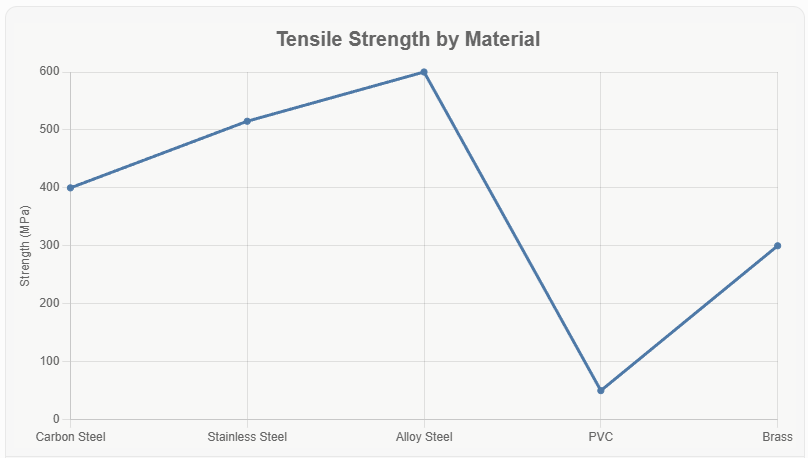
The data in the figure shows that stainless steel has a strength value of 515 MPa, resulting in a deformation rate of only 0.2% under high temperature and pressure, while PVC, with a strength of only 50 MPa, is suitable for low-pressure scenarios .
Test data indicate that in a salt spray environment, the corrosion rate of stainless steel flanges is only 0.01 mm/year, which is 10 times lower than the 0.1 mm/year rate of carbon steel, leading to a tenfold increase in service life . Specifically:
-
304 Stainless Steel can withstand environments with chloride ion concentrations up to 200 PPM.
-
316 Stainless Steel offers even higher resistance, significantly reducing corrosion-related failure rates in marine engineering .
In applications such as sulfuric acid plants, stainless steel maintains good corrosion resistance even at high temperatures of 200°C . Furthermore, in the pharmaceutical industry, stainless steel flanges require a high surface finish, typically below Ra 0.8μm, to prevent bacterial growth .
Material Performance Data Sheet
| Material Type | Tensile Strength (MPa) | Corrosion Resistance | Temperature Range (°C) | Typical Applications |
| Carbon Steel | 400 | Moderate | -29 to 425 | General Piping |
| Stainless Steel | 515 | Excellent | -196 to 816 | Chemical, Marine |
| Alloy Steel | 600 | Good | -46 to 540 | High-Temperature, High-Pressure |
| PVC | 50 | Excellent | 0 to 60 | Low-Pressure Corrosive Environments |
| Brass | 300 | Good | -100 to 200 | Decorative Connections |
Based on the data provided, stainless steel flanges have become the preferred choice in corrosive environments, driving market share growth. Practical case studies demonstrate their effectiveness:
-
In a chemical plant, the service life of equipment was extended by 5–10 years after adopting 316 stainless steel flanges, with maintenance costs significantly reduced .
-
On an offshore drilling platform, the use of duplex stainless steel resulted in a 30% reduction in corrosion-related failures .
The following diagram illustrates these advantages:
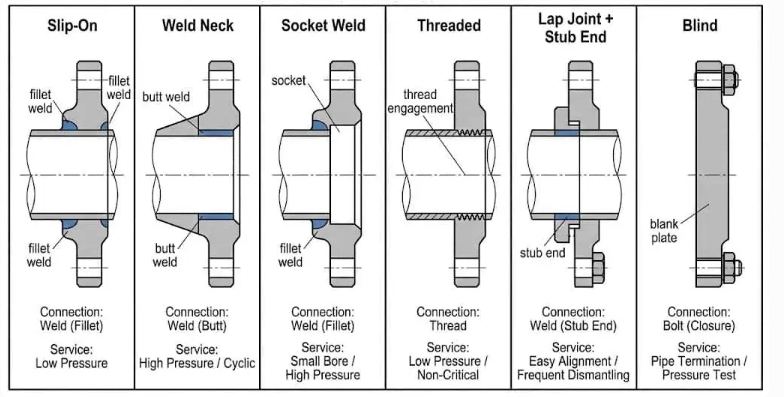
To provide a more detailed illustration of the internal structure and material layers of the stainless steel flange, the following additional product schematic highlights its alloy composition and surface treatment:
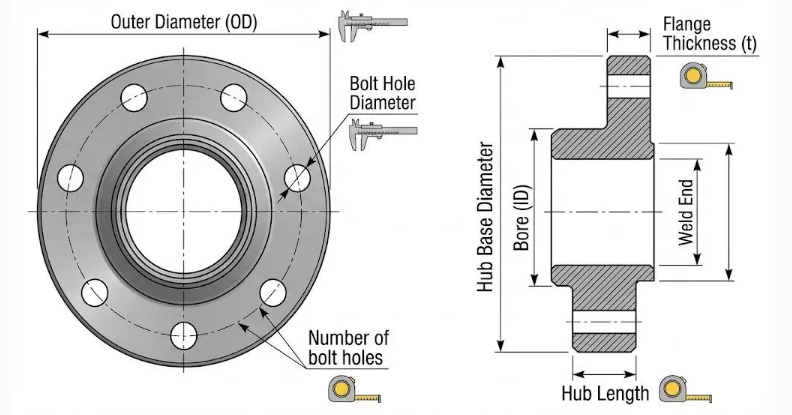
The future development of stainless steel flanges includes nano-coating technology to further enhance corrosion resistance, as well as the adoption of recycled materials in sustainable manufacturing to reduce environmental impact.
Media Contact
Company Name: Sichuan Baishuo Pipeline Co., Ltd.
Email:Send Email
Country: China
Website: https://www.baishuopipeline.com/

