
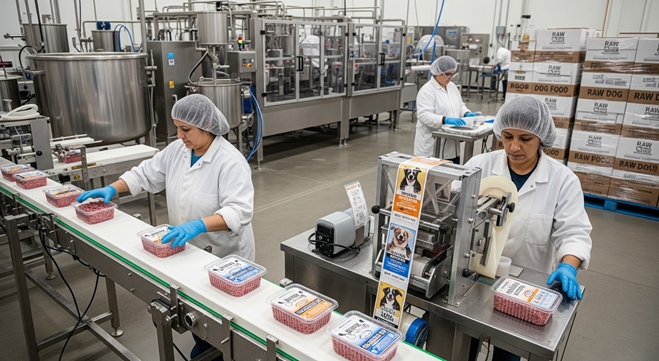
Pet-friendly workplaces and residential communities are expanding, and with that comes a focused question for procurement and facilities: how to evaluate raw dog food programs with the same rigor you apply to any other amenity. This guide offers a compliance-ready approach—budget clarity, documented safety, reliable delivery, and assortment control—written for decision makers.
Safety & Compliance You Can Document
Organizations should treat raw diets like any refrigerated or frozen food program: create written receiving, handling, and storage SOPs and confirm vendors can support them. Require proof of complete-and-balanced formulations, lot traceability, and recall communication protocols. Public-health and veterinary bodies outline the core risks and handling expectations; sharing these references internally helps legal and risk teams calibrate policy:
- FDA: Pet Food — labeling basics, ingredient definitions, and safety monitoring
- AVMA: Raw or Undercooked Animal-Source Protein in Cat and Dog Diets — professional guidance on risk management and hygiene
Ask suppliers to provide temperature logs, pack-and-ship timestamps, and exception reports for missed or warm deliveries. For shared employee freezers, designate spill-safe areas, set thermometer checks, and use tamper-evident packaging. These small controls keep audits straightforward while protecting employee health standards.
Budget Predictability, Not Just Price per Pound
Finance leaders care about total cost of ownership. Build a simple model that includes unit price, delivery surcharges, cold-chain packaging, storage equipment, and administration time. Negotiate tiered pricing and subscribe-and-save options tied to order predictability, and standardize a portioning calculator in your RFP so suppliers quote on the same assumptions across dog sizes and life stages. This reduces variance when programs scale to multiple sites.
Delivery Windows That Fit Your Operations
Operational adoption often lives or dies on logistics. Ask for written SLAs that define delivery windows by site, packaging that suits dock or concierge receiving, and proof of cold-chain integrity at handoff. Facilities teams should confirm that packaging can move safely from receiving to storage without leakage, that cartons are labeled by SKU and life stage, and that your supplier can support seasonal route adjustments. These details reduce support tickets and keep the program invisible—in the best way—to everyday operations.
Assortment & Label Transparency Without Chaos
Employees value choice, but too many options create noise. Curate a core assortment anchored by one or two “house” lines, then add targeted SKUs for common needs (limited-ingredient, single-protein). Require vendors to deliver clear labels—life stage, ingredient list in descending order by weight, guaranteed analysis, calorie content—and a short label interpretation guide for HR or community managers. That way, internal teams can direct owners to the right items without offering medical advice.
Sourcing & Vendor Fit: Keep It Neutral and Useful
When you reference suppliers, keep it factual and aligned with the page you’re linking to. For example, teams exploring raw dog food options may evaluate providers that publish transparent sourcing details, delivery coverage, and storage guidance on their product pages. The aim is not to promote a brand; it’s to point readers to relevant, on-page information they can verify. Maintain a neutral tone and avoid promotional language while ensuring the link appears inside the main body, not in the introduction or conclusion.
Change Management: Pilot, Measure, Communicate
Treat rollout like any amenity change. Start with a single location, gather feedback on ordering experience, product acceptance, and packaging waste, and adjust the assortment. Publish a one-page policy describing program scope (retail on-site vs. employee discount), eligible locations, and contacts for issues. Communicate the why (employee convenience, wellness alignment) and the how (ordering cadence, pickup rules) to minimize back-channel workarounds.
Governance & Reporting
Establish a quarterly business review to track fill rate, on-time performance, temperature excursions, and any recall responsiveness. Maintain vendor scorecards and allow facilities to flag persistent packaging or delivery issues. Keeping nutrition guidance with licensed veterinarians protects your organization while supporting responsible pet ownership.
Additional Resources
- AVMA — Raw Diets (Professional Guidance)
- FDA — Pet Food (Labeling & Safety)
- Explore portion planning with a raw dog food calculator to standardize budget and ordering assumptions across sites.
Media Contact
Company Name: All Raw Dog Food
Email:Send Email
Country: Canada
Website: https://allrawdogfood.ca/

