
In the intricate ecosystem of electronic components, the display panel often serves as the critical interface between machine and user. Among the myriad of options available to engineers and product developers, the 7.0-inch 800*480 G070VTN01.0 LCD panel stands out as a specific and noteworthy solution. Manufactured by AUO (AU Optronics), a global leader in display technology, this panel model represents a carefully engineered balance of form, function, and reliability for embedded applications.
This article delves into a comprehensive analysis of the G070VTN01.0. We will move beyond basic datasheet specifications to explore its defining technical characteristics, the unique value proposition offered by its AUO pedigree, and its ideal application environments. Furthermore, we will examine the critical integration considerations, compare it within the broader market landscape, and discuss its role in contemporary design trends. Our goal is to provide hardware designers, procurement specialists, and tech enthusiasts with a deep, actionable understanding of this component's capabilities and strategic fit.
Decoding the G070VTN01.0: Core Specifications and Performance
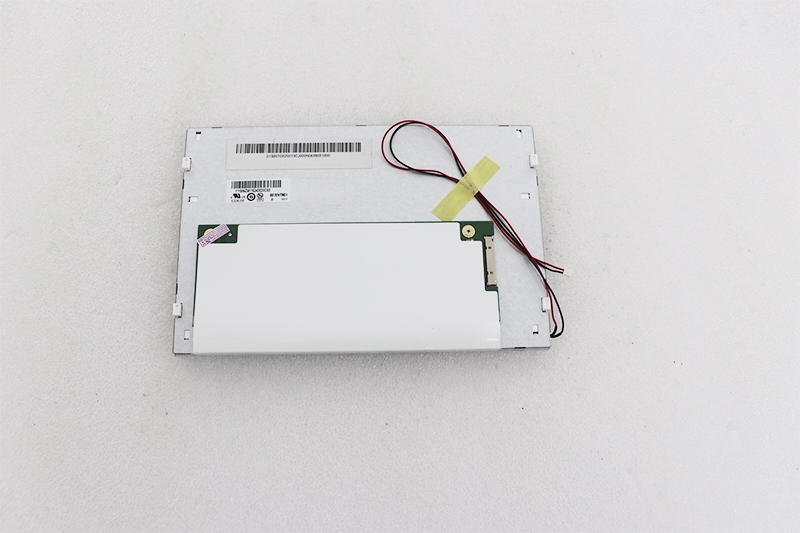
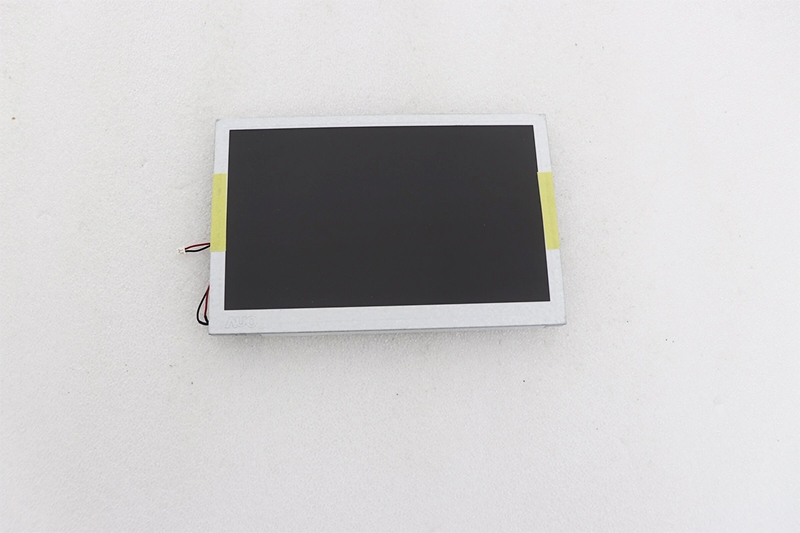
The G070VTN01.0 is a 7.0-inch diagonal TFT-LCD module with a native resolution of 800 x 480 pixels (WVGA). This resolution, on a screen of this size, results in a pixel density that offers clear, legible graphics and text, making it suitable for human-machine interface (HMI) applications where information clarity is paramount. The panel typically employs a transmissive design, requiring a backlight unit (BLU) for illumination, often utilizing LED technology for longevity and uniform brightness.
Key performance parameters include its aspect ratio, which is approximately 15:9, a slightly wider format than standard 16:9 widescreens. This can be advantageous for certain industrial dashboard layouts. Other vital specs encompass its brightness level (usually measured in nits), contrast ratio, viewing angle (often listed as 70/70/50/70 degrees in CR≥10), and color gamut. The interface is typically LVDS (Low-Voltage Differential Signaling), a robust and common standard for transmitting high-speed video data in noisy industrial environments, ensuring signal integrity over longer cable runs compared to older TTL interfaces.
The AUO Advantage: Manufacturing Quality and Reliability
Specifications alone do not define a component's value; the manufacturer's reputation and processes are equally critical. AUO brings significant weight to the G070VTN01.0. As a tier-one panel maker, AUO invests heavily in advanced fabrication facilities, stringent quality control protocols, and extensive reliability testing. This translates directly to the end-user in several ways.
Panels from AUO are known for their consistency in performance and physical characteristics across production batches, a non-negotiable requirement for mass production. They undergo rigorous testing for factors like high-temperature operation, low-temperature startup, humidity resistance, and mechanical vibration. This inherent reliability reduces the risk of field failures, lowers total cost of ownership, and extends the operational lifespan of the end product. Choosing an AUO panel like the G070VTN01.0 is often a strategic decision to mitigate risk and ensure product quality.
Ideal Application Ecosystems and Use Cases
The specific attributes of the G070VTN01.0 make it a compelling choice for a well-defined set of applications. Its 7-inch size and WVGA resolution create a sweet spot for compact, interactive devices that require a functional display without excessive bulk. The primary domain for this panel is industrial automation and control.
You will find it at the heart of factory floor HMIs, programmable logic controller (PLC) touchscreen interfaces, portable test and measurement equipment, and embedded control panels for machinery. Beyond heavy industry, it serves well in point-of-sale (POS) systems, automotive aftermarket displays (e.g., for rear-seat entertainment or diagnostic tools), and certain medical monitoring devices where reliability is crucial. Its balance of size, clarity, and ruggedness makes it a versatile workhorse for B2B and specialized B2C electronics.
Critical Integration Considerations for Design Engineers
Successfully integrating the G070VTN01.0 into a product requires careful attention beyond simply connecting the LVDS cable. Engineers must design the power supply circuitry to deliver clean, stable voltage to both the LCD logic and the backlight driver, as electrical noise can manifest as visual artifacts. Thermal management is also essential; while LEDs generate less heat than CCFL backlights, proper ventilation ensures consistent performance and longevity.
The choice of a compatible touch panel overlay (typically resistive or projected capacitive) and its controller adds another layer of complexity. Furthermore, the mechanical design must account for the panel's exact dimensions, bezel size, mounting hole positions, and connector orientation. Sourcing a matching driver board (often called a controller board or LCD interface board) that converts a source signal (like HDMI or RGB from an SoM) to the panel's native LVDS timing is a fundamental step in the development process.
Market Context and Competitive Analysis
Placing the G070VTN01.0 within the broader market reveals its competitive positioning. It exists in a segment populated by similar panels from other major manufacturers like Innolux, BOE, and LG Display. Competing models may offer slight variations in brightness, contrast, or power consumption. The G070VTN01.0's primary differentiator is often the perceived and proven reliability associated with the AUO brand, which can justify a potential price premium in cost-sensitive but failure-intolerant applications.
For designers, the decision often involves a trade-off analysis: balancing absolute lowest cost against supply chain stability, long-term availability, and performance consistency. The existence of "compatible" or "alternative" panels from other suppliers provides flexibility but may introduce validation overhead. The G070VTN01.0, particularly when designed into a product from its inception, represents a choice favoring minimized integration risk and assured quality.
Future-Proofing and Obsolescence Management
In the fast-moving electronics industry, display panels can have lifecycles shorter than the products they inhabit. A key consideration for any embedded component is its long-term availability. AUO, as a large manufacturer, typically provides lifecycle forecasts and end-of-life (EOL) notifications well in advance. For products expected to be in production for many years, this is a critical factor.
Strategies for managing this include engaging with authorized distributors or specialists who commit to holding long-term inventory, designing with a "pin-compatible" family of panels in mind (where multiple AUO models share the same mechanical and electrical interface), or considering module-level solutions that abstract the raw panel. Understanding the procurement landscape for the G070VTN01.0 is as important as understanding its technical specs, ensuring that a successful design today does not become a logistical headache tomorrow.
FAQs: G070VTN01.0 LCD Panel
Q1: What is the screen size and resolution of the G070VTN01.0? A1: It is a 7.0-inch diagonal TFT LCD with a resolution of 800 x 480 pixels (WVGA).
Q2: Who manufactures this LCD panel? A2: It is manufactured by AU Optronics (AUO), a leading global display panel producer.
Q3: What is the primary interface for this display? A3: It typically uses an LVDS (Low-Voltage Differential Signaling) interface.
Q4: Is this a touchscreen panel? A4: The G070VTN01.0 is a display-only module. A separate touch panel (resistive or capacitive) must be added for touch functionality.
Q5: What are its most common applications? A5: It's widely used in industrial HMIs, POS systems, portable instrumentation, and embedded control panels.
Q6: What is the advantage of choosing an AUO panel? A6: AUO panels are known for high manufacturing quality, consistency, reliability, and rigorous testing, reducing long-term failure risks.
Q7: What do I need to drive this panel from a single-board computer? A7: You will need a compatible LCD driver board that converts your SBC's output (e.g., HDMI) to the panel's native LVDS signal and timing.
Q8: How do I manage potential obsolescence of this component? A8: Work with suppliers for lifecycle forecasts, consider pin-compatible AUO alternates, or explore module-level solutions with long-term availability guarantees.
Q9: What is the typical brightness of this panel? A9: Brightness varies, but common versions offer around 300 to 450 nits, suitable for indoor industrial use.
Q10: Can this panel operate in extreme temperatures? A10: Standard commercial-grade panels have limited temperature ranges. For extreme environments, confirm extended temperature specifications with the supplier or seek an industrial-grade variant.
Conclusion
The AUO G070VTN01.0 7-inch LCD panel is far more than a simple collection of glass and electronics. It represents a mature, reliable solution engineered for demanding embedded applications where performance consistency and longevity are critical. Its WVGA resolution on a 7-inch canvas provides an optimal blend of information density and physical compactness, making it a perennial favorite for industrial interfaces and specialized devices.
Selecting this panel is a decision that balances technical specifications with the intangible yet crucial benefits of tier-one manufacturing quality. For engineers and product managers, a deep understanding of its integration requirements, market position, and lifecycle strategy is essential to fully leverage its value. In a world of disposable electronics, the G070VTN01.0 stands as a component designed for the long haul, enabling the creation of robust and dependable digital interfaces.
Media Contact
Company Name: Yingi Technology
Email:Send Email
Country: China
Website: https://www.invshop.com/

