
In industrial automation, machinery, home appliances, and control systems, push button switches are among the most common and essential control components. Although there are many designs on the market, push buttons can essentially be divided into two primary types based on structure and operating logic: Momentary and Latching
Understanding the differences between them helps engineers, buyers, and equipment manufacturers make better selections and improve equipment stability and safety
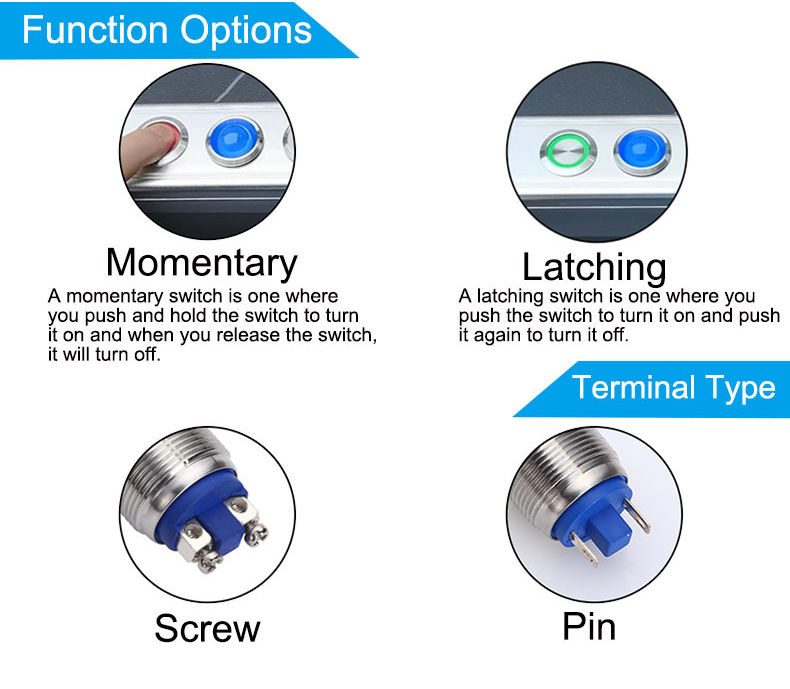
1. Momentary Switch
Feature: Active only while pressed; returns immediately when released
This type of switch works like a doorbell The circuit is on only when your finger is pressing it; it resets automatically once you let go
Typical Applications:
Machine start/stop controls
Console command input
Medical device interfaces
Industrial automation control panels
Advantages:
High safety level
Intuitive operation
Ideal for frequent pressing
Suitable for temporary ON/OFF control
With the rise of automation, momentary buttons are evolving toward illuminated ring indicators, tactile feedback, and silent silicone structures, providing better interaction for smart equipment.
2. Latching Switch
Feature: Press once to stay ON; press again to turn OFF
Its operation is similar to a table lamp switch— press to activate and press again to deactivate.
Typical Applications:
Power control
Mode switching (e.g., Work/Standby)
LED lighting control
Security systems
Advantages:
Ideal for long-duration power supply
Clear indication of device status
Convenient operation without continuous pressing
As devices continue to miniaturize and become smarter, latching switches are trending toward shorter travel, longer lifespan, metal construction, and higher IP waterproof ratings
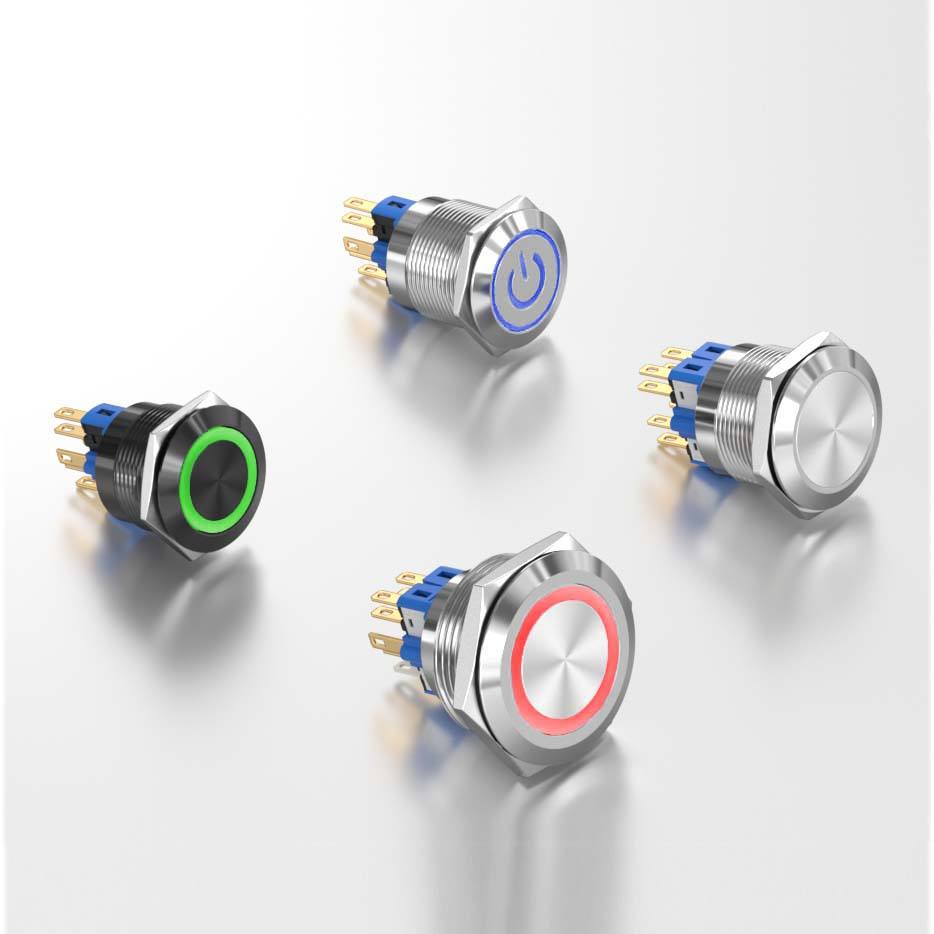
3. Key Differences at a Glance
| Type | Circuit State | Typical Uses | Key Features |
| Momentary | Off when released | Start, reset, command input | Safer, quick response |
| Latching | Stays on until pressed | Power switch, long-term power control | Easy operation, clear status indication |
Future Outlook: From Mechanical Control to Intelligent Interaction
Driven by Industry 4.0 and AI, push button switches are evolving toward smarter and more interactive designs:
More intuitive LED indicators (RGB, breathing effects)
Increased use of touch-type and light-touch buttons
IP67 / IP68 waterproof ratings becoming mainstream
Metal buttons enhance durability and device aesthetics
More flexible signal modules for automation systems
Even as smart control becomes more widespread, physical push buttons will remain irreplaceable in critical environments due to their intuitive operation, safety, tactile feedback, and reliability
Why Team Up With ONPOW?
Over 40 years manufacturing experience
CE, RoHS, REACH, CCC certified
Wide product range covering 8–40mm mounting sizes
with strong OEM/ODM capability
With the trend toward smart interaction, ONPOW continues to upgrade its switches with RGB signal modules, custom icons, waterproof structures, and materials optimised for long-term stability.
Conclusion
Whether it is momentary or latching, ONPOW provides high-quality solutions matching diverse industrial needs. Choosing the right switch type improves equipment safety, user experience and long-term reliability—helping companies build better products for the next generation.
Media Contact
Company Name: ONPOW Push Button Manufacture Co., Ltd.
Email:Send Email
Phone: +86-577-62628788
Country: China
Website: https://www.onpowbutton.com/

