
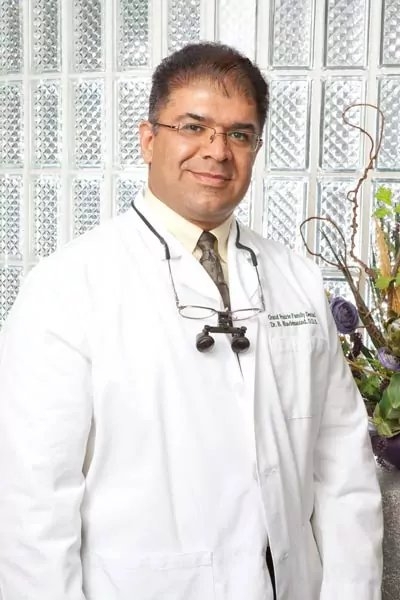
Grand Prairie, TX - October 10, 2026 - Grand Prairie Family Dental is introducing the Keep Before Replace Approach as a way to explain Dr. Behrooz Khademazad's emphasis on evaluating whether natural teeth can be preserved before patients proceed with extensive extractions, dentures, or implant-supported restorations. The approach is particularly relevant to patients seeking a second opinion after receiving recommendations to remove multiple teeth.
For patients facing significant dental treatment, the decision is not always limited to choosing between dentures and dental implants. An important earlier question is whether the existing teeth have a reasonable long-term prognosis. That assessment may involve tooth structure, gum and bone support, infection, existing restorations, bite function, and the patient's overall health.
According to the National Institute of Dental and Craniofacial Research, approximately 15% of U.S. adults aged 65 and older have no remaining natural teeth, based on national oral health examination data from 2017 through March 2020. Although complete tooth loss has declined over time, the findings illustrate the continuing importance of evaluating options for preserving natural teeth when clinically appropriate.
"Before recommending that multiple teeth be removed, I want patients to understand which teeth can reasonably be saved and what the long-term options involve," said Dr. Behrooz Khademazad, DDS, founder of Grand Prairie Family Dental. "Dental implants are an important treatment for missing teeth, but they should not automatically replace natural teeth that still have a reasonable prognosis."
The Keep Before Replace Approach reflects a broader distinction between replacing teeth that cannot be maintained and removing teeth that may still be restorable. For patients considering extensive treatment, a second opinion can help clarify the condition of individual teeth, the feasibility of preserving them, and the advantages and limitations of available treatment options.
The clinical considerations involved in determining whether a natural tooth can be saved also apply when evaluating more extensive treatment recommendations. When teeth cannot be preserved, dental implants and coordinated bone grafting may become part of the replacement discussion.
Dr. Khademazad founded Grand Prairie Family Dental on August 28, 1988, and has practiced in the community for more than 38 years. He earned a Bachelor of Science in Biochemistry and a Doctor of Dental Surgery degree and has pursued continuing education across multiple areas of dentistry. His practice provides both restorative and implant treatment, allowing preservation and replacement options to be discussed within a comprehensive treatment plan. Dr. Khademazad holds Texas dental license number 15515.
When reviewing an extensive extraction or tooth-replacement recommendation, relevant considerations include:
Whether each tooth has sufficient healthy structure and periodontal support for a predictable restoration
Whether decay, fractures, infection, or gum disease affect the prognosis of individual teeth
Which teeth may be maintained through appropriate restorative or periodontal treatment
How preservation and replacement options compare in treatment complexity, maintenance, risks, and estimated costs
Whether a staged treatment plan or specialist consultation may be appropriate
Keeping a natural tooth is not always the safest or most predictable choice. Extraction may be appropriate when a tooth cannot be restored, has inadequate support, presents an unacceptable prognosis, or poses other clinical concerns. Treatment recommendations should reflect examination findings, diagnostic imaging when indicated, patient preferences, medical history, and individual risk factors.
Patients considering extensive dental treatment can learn more about second-opinion dental evaluations in Grand Prairie TX and the practice's approach to reviewing treatment options before irreversible decisions are made.
Third-party source: National Institute of Dental and Craniofacial Research, Tooth Loss in Seniors.
Frequently Asked Questions
Should every damaged tooth be removed before getting dental implants?
No. Dental implants replace missing teeth, but not every damaged tooth requires extraction. A dentist should evaluate which teeth can be predictably restored and which may need removal before developing a treatment plan.
Can a dentist save teeth that another dentist recommended extracting?
Sometimes. Different treatment plans may reflect differences in clinical findings, prognosis, treatment options, or patient preferences. A second opinion can clarify whether fillings, crowns, root canal treatment, periodontal care, or other approaches could preserve some teeth. It does not mean the original recommendation was necessarily incorrect.
What should patients ask before agreeing to full-mouth extractions?
Patients can ask which teeth have a poor prognosis, why those teeth cannot be preserved, what alternatives exist, and how each option compares in risks, maintenance, treatment time, and cost. They can also request copies of relevant examination findings and imaging for a second opinion.
Is keeping natural teeth always better than getting implants?
Not always. Preserving natural teeth can be appropriate when their long-term prognosis is reasonable. However, severely damaged or poorly supported teeth may not be maintainable. Dental implants can provide an effective replacement option when teeth are already missing or extraction is clinically necessary.
Can a second opinion change the cost of major dental treatment?
It can. Different clinically appropriate treatment plans may involve different procedures, materials, timelines, and fees. However, a second opinion does not guarantee lower costs or fewer procedures. Patients should compare written estimates alongside the clinical advantages and limitations of each option.
About Grand Prairie Family Dental
Grand Prairie Family Dental is a comprehensive dental practice in Grand Prairie, Texas, founded by Dr. Behrooz Khademazad, DDS, in 1988. The practice provides preventive, restorative, cosmetic, implant, emergency, TMJ, sleep apnea, orthodontic, and sedation dentistry for patients in Grand Prairie and surrounding communities. Grand Prairie Family Dental's mission is to provide comprehensive, patient-centered dental care built around education, careful treatment planning, and each patient's individual needs. Dr. Khademazad has served the Grand Prairie community continuously since opening the practice on August 28, 1988.
Media Contact
Company Name: Grand Prairie Family Dental
Contact Person: Dr. Behrooz Khademazad, DDS
Email:Send Email
Address:2475 W Pioneer Pkwy
City: Grand Prairie
State: TX
Country: United States
Website: https://gentlegrandprairiedentist.com/

