
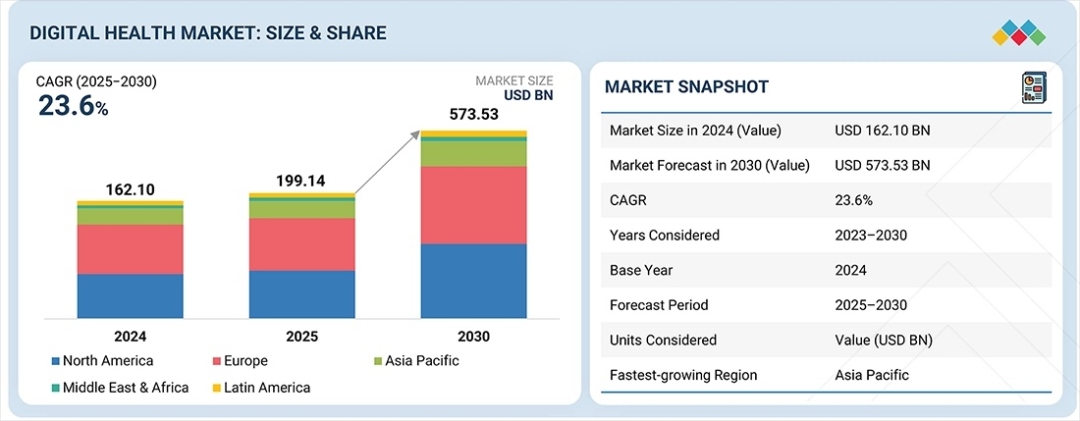
The global digital health market is on the brink of a massive transformation, projected to surge from USD 199.14 billion in 2025 to a staggering USD 573.53 billion by 2030. This growth, characterized by a robust Compound Annual Growth Rate (CAGR) of 23.6%, is primarily fueled by a perfect storm of technological breakthroughs and shifting healthcare demographics. As the global geriatric population grows, the subsequent rise in chronic conditions like diabetes and cardiovascular diseases has made continuous, remote monitoring a necessity rather than a luxury. Furthermore, the increasing penetration of smartphones and high-speed connectivity (5G/6G) has democratized access to care, allowing for a more patient-centric approach that emphasizes preventive wellness over reactive treatment.
Download PDF Brochure:https://www.marketsandmarkets.com/pdfdownloadNew.asp?id=45458752
Evolution of Remote Patient Monitoring and AI-Driven Diagnostics
The core of this market's expansion lies in the sophisticated evolution of the solutions and applications segment. In 2024, this segment held the largest market share, driven by the seamless integration of telemedicine across both primary and specialty care. Today’s digital health landscape is no longer limited to simple video calls; it encompasses a complex ecosystem of Remote Patient Monitoring (RPM), virtual-first care models, and AI-powered diagnostic tools. Artificial Intelligence is playing a pivotal role in triaging patients and providing clinical decision support, which significantly reduces the burden on traditional hospital infrastructure.
Key industry players like Medtronic and Koninklijke Philips N.V. have pioneered connected medical devices that transmit real-time data to healthcare providers. For example, recent developments such as Medtronic’s partnership with Corsano Health to distribute medically certified wearables in Europe highlight the shift toward predictive analytics. These devices monitor vital signs such as ECG and respiration, feeding data into AI models that can flag potential health crises before they occur. This shift toward "Hospital-at-Home" models is not only improving patient outcomes but is also a critical component in reducing global healthcare expenditure by shifting care to lower-cost outpatient settings.
Targeted Chronic Disease Management and the Dominance of Diabetes Solutions
When examining the market by disease, the diabetes segment accounted for the largest share in 2024. This is largely due to the global prevalence of the condition and the high demand for continuous management tools. The emergence of Continuous Glucose Monitoring (CGM) systems and smart insulin pens has revolutionized how patients interact with their health data. Companies like Dexcom, Inc. and Abbott have introduced direct-to-consumer biowearables, such as the Abbott Lingo and Libre Rio, which allow for metabolic monitoring without a prescription.
Furthermore, the integration of Generative AI is providing patients with personalized, contextual recommendations. Dexcom’s launch of a GenAI platform built on Google Cloud’s Gemini models is a prime example of how data from activity, sleep, and glucose levels can be synthesized to offer actionable lifestyle advice. Beyond diabetes, the mental and behavioral health segment is projected to grow at the fastest rate through 2030. Digital therapeutics (DTx) and mental health apps are filling a critical gap in care, particularly in underserved regions where traditional psychiatric services are scarce. By providing accessible, stigma-free support, digital platforms are becoming the first line of defense in managing mental wellness on a global scale.
Regional Growth Dynamics and the Infrastructure of the Future
Geographically, North America continues to lead the market, accounting for a 43.4% revenue share in 2025. This dominance is supported by high digital literacy, a strong regulatory framework, and early adoption of value-based care models. However, the Asia Pacific region is slated to be the fastest-growing market during the forecast period. Rapid technological adoption in China and India, coupled with massive government initiatives like India’s Ayushman Bharat Digital Mission (ABDM), is building the foundational digital health infrastructure needed for large-scale transformation. These initiatives aim to create interoperable Electronic Health Records (EHRs) and unified health IDs, ensuring that patient data is accessible across the entire continuum of care.
Request Sample Pages-https://www.marketsandmarkets.com/requestsampleNew.asp?id=45458752
Despite this optimistic outlook, the market faces challenges such as data privacy concerns and low digital literacy in certain demographics. To overcome these hurdles, the industry is moving toward a more intelligent health ecosystem that prioritizes cybersecurity and user-friendly interfaces. Cloud service providers like AWS and Microsoft are essential partners in this journey, offering the secure, scalable infrastructure required to manage the massive influx of health data. As the market moves toward 2030, the focus will increasingly be on creating a seamless, data-driven experience that empowers patients and optimizes clinical workflows, ultimately leading to a more resilient and personalized global healthcare system.
Media Contact
Company Name: MarketsandMarkets™ Research Private Ltd.
Contact Person: Mr. Rohan Salgarkar
Email:Send Email
Phone: 18886006441
Address:1615 South Congress Ave. Suite 103, Delray Beach, FL 33445
City: Florida
State: Florida
Country: United States
Website: https://www.marketsandmarkets.com

