
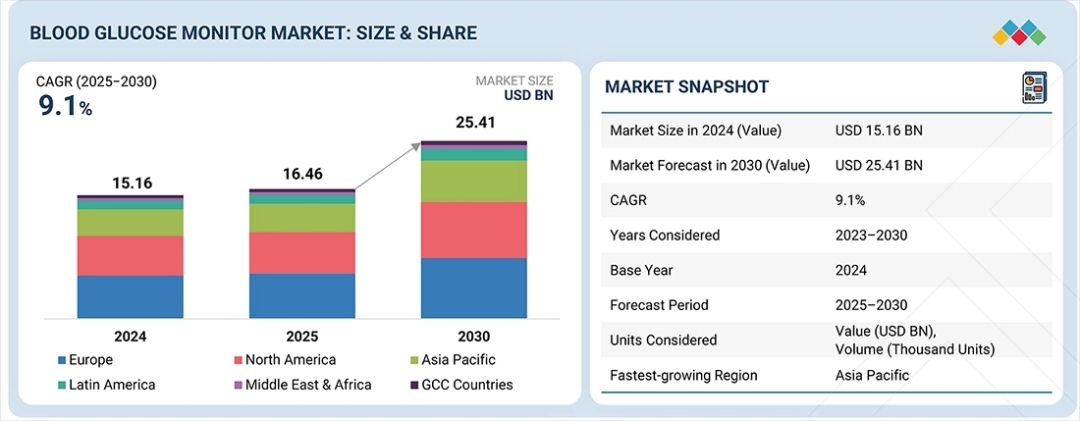
The global blood glucose monitoring system market, valued at USD 15.16 billion in 2024, reached USD 16.46 billion in 2025 and is projected to grow at a strong CAGR of 9.1% from 2024 to 2030, ultimately reaching USD 25.41 billion by 2030. The market is witnessing rapid technological transformation as healthcare providers and patients increasingly adopt advanced monitoring technologies such as continuous glucose monitoring (CGM) systems and smart self-monitoring devices. These innovations provide improved accuracy, real-time data insights, and enhanced convenience compared with traditional glucose monitoring techniques.
Download PDF Brochure:https://www.marketsandmarkets.com/pdfdownloadNew.asp?id=14912252
The increasing burden of diabetes worldwide, coupled with growing awareness about proactive disease management, is significantly boosting demand for modern glucose monitoring solutions. Technological progress in sensor technology, smartphone integration, and cloud-based monitoring platforms has further enhanced patient engagement and treatment personalization. As digital health ecosystems expand globally, blood glucose monitoring devices are evolving from simple diagnostic tools to integrated disease management platforms, supporting better glycemic control and improved long-term health outcomes.
Increasing Diabetes Burden Driving Demand for Monitoring Technologies
The rising global prevalence of diabetes remains the most significant driver for the blood glucose monitoring system market. Diabetes has emerged as one of the fastest-growing chronic diseases worldwide, affecting millions of people across both developed and developing regions. According to global health estimates, approximately 830 million people were living with diabetes in 2022, reflecting the alarming scale of the disease burden.
The International Diabetes Federation (IDF) further estimates that 589 million adults aged 20–79 years were living with diabetes in 2025, representing about 11.1% of the global adult population. This number is expected to rise dramatically by 45%, reaching nearly 853 million by 2050. The increasing prevalence of sedentary lifestyles, obesity, poor dietary habits, and ageing populations are among the key contributors to this rising incidence.
Additionally, diabetes affects individuals across all age groups. In 2024, more than 9.5 million people worldwide were living with type 1 diabetes, including approximately 1.9 million children and adolescents under the age of 20. The disease also contributes significantly to global mortality, accounting for over 3.4 million deaths annually, or approximately 9.3% of total global mortality.
This growing disease burden is creating sustained demand for accurate, reliable, and easy-to-use blood glucose monitoring systems. Regular monitoring is essential for effective diabetes management, enabling patients to track glucose fluctuations, adjust medication or insulin therapy, and prevent severe complications such as cardiovascular disease, kidney damage, and neuropathy. As healthcare systems emphasize preventive care and early disease management, the adoption of advanced monitoring technologies is expected to accelerate significantly.
Continuous Glucose Monitoring and Smart Devices Reshaping the Market
Technological advancements in blood glucose monitoring systems are transforming the landscape of diabetes care. Modern devices such as continuous glucose monitoring (CGM) systems and smart glucose meters allow patients to track glucose levels continuously, eliminating the need for frequent finger-prick tests associated with traditional methods.
Among product categories, continuous glucose monitoring systems are expected to witness the fastest growth during the forecast period. These devices provide automated and real-time glucose readings throughout the day, offering valuable insights into glucose trends and enabling early detection of fluctuations. Continuous monitoring helps patients maintain better glycemic control and reduces the risk of severe complications associated with diabetes.
Recent innovations have further enhanced the capabilities of CGM devices. Advanced sensors offer longer wear times, improved accuracy, and seamless integration with smartphones, insulin pumps, and digital health platforms. For example, next-generation sensors such as Dexcom G7 and Abbott FreeStyle Libre 3 have improved patient convenience while delivering more precise glucose measurements.
The integration of glucose monitoring systems with digital health platforms represents another major technological advancement. Bluetooth-enabled devices can now synchronize data with mobile applications and cloud-based systems, enabling remote monitoring and real-time analysis. Patients receive personalized alerts, predictive analytics, and automated insulin dosage recommendations, improving overall disease management.
Healthcare providers also benefit from these connected platforms. Remote monitoring capabilities allow clinicians to track patient data, conduct teleconsultations, and identify high-risk cases early. This digital transformation is improving clinical outcomes while reducing hospital visits and healthcare costs. As governments and insurers increasingly support digital healthcare initiatives, the adoption of connected glucose monitoring systems is expected to grow rapidly worldwide.
Request Sample Pages-https://www.marketsandmarkets.com/requestsampleNew.asp?id=14912252
Expanding Home Care Monitoring and Strong Growth in Asia Pacific
The growing preference for home-based healthcare solutions is significantly influencing the adoption of blood glucose monitoring devices. Among end users, the self/home care segment currently holds the largest market share, driven by the increasing number of individuals managing diabetes independently. Home monitoring devices allow patients to check glucose levels conveniently and frequently without visiting healthcare facilities.
User-friendly device designs, improved affordability, and widespread availability of portable monitoring systems have further supported adoption. Modern glucose meters and CGM systems are designed to be intuitive and accessible, enabling patients of all ages to manage their condition effectively. The integration of mobile applications, digital reminders, and telehealth platforms has further enhanced patient engagement and adherence to treatment regimens.
In addition to home monitoring trends, regional dynamics are shaping the growth trajectory of the market. Asia Pacific is expected to be the fastest-growing region during the forecast period. The region is experiencing a rapid increase in diabetes prevalence due to lifestyle changes, urbanization, and ageing populations. Countries such as China, India, and Japan are witnessing rising demand for affordable and convenient glucose monitoring solutions.
Improving healthcare infrastructure, increasing disposable incomes, and expanding digital health ecosystems are also supporting market growth across the region. Governments and healthcare organizations are promoting early diagnosis and continuous monitoring through awareness campaigns and public health initiatives. These developments are expected to accelerate the adoption of both traditional and advanced monitoring technologies in Asia Pacific.
Despite strong growth prospects, certain challenges remain. The high cost of continuous and flash glucose monitoring systems continues to limit accessibility in low- and middle-income regions. Regulatory hurdles, particularly for emerging non-invasive glucose monitoring technologies, also present challenges for manufacturers seeking market approval. However, ongoing technological innovation, improved reimbursement policies, and increasing global awareness about diabetes management are expected to support long-term market expansion.
Key Market Players
Major companies operating in the global blood glucose monitor market include Abbott Laboratories (US), Medtronic (Ireland), Dexcom (US), Sinocare (China), F. Hoffmann-La Roche Ltd (Switzerland), B. Braun SE (Germany), Nipro (Japan), Senseonics (US), and i-Sens, Inc. (South Korea). These organizations are actively investing in product innovation, sensor technology, and digital health integration to strengthen their market presence and address the growing global demand for advanced diabetes monitoring solutions.
Related Markets
Media Contact
Company Name: MarketsandMarkets™ Research Private Ltd.
Contact Person: Mr. Rohan Salgarkar
Email:Send Email
Phone: 18886006441
Address:1615 South Congress Ave. Suite 103, Delray Beach, FL 33445
City: Florida
State: Florida
Country: United States
Website: https://www.marketsandmarkets.com/Market-Reports/blood-glucose-monitoring-system-market-14912252.html

