
When choosing interior decoration materials, buyers often compare WPC decorative panels with traditional materials such as solid wood, Pvc Panels, MDF boards, and gypsum boards. Each material has its own advantages, but WPC interior panels are becoming increasingly popular due to their balanced performance and cost efficiency.
This article explains the main differences between Wpc Interior decorative materials and other common decoration solutions.
WPC vs Solid Wood Panels
Solid wood panels provide natural texture and premium appearance, but they also come with several limitations.
Solid wood is sensitive to humidity and temperature changes. It can easily crack, warp, or expand in indoor environments with unstable climate conditions. Maintenance costs are high, and installation usually requires skilled labor.
WPC decorative panels combine wood fiber with polymer materials, which significantly improves dimensional stability. They do not absorb moisture easily and require much less maintenance. For commercial projects and large-scale residential decoration, WPC offers more consistent quality and lower long-term cost.
WPC vs PVC Decorative Panels
PVC wall panels are known for low cost and light weight. However, their surface texture often looks artificial and lacks the natural appearance required for high-end interior decoration.
WPC wall panels provide better surface texture and higher structural strength. With modern co-extrusion technology and 3D embossing, WPC wall cladding delivers more realistic wood grain effects and better scratch resistance. For projects that require durability and premium appearance, WPC panels perform better than standard PVC panels.
WPC vs MDF Boards
MDF boards are widely used in furniture and interior decoration, but they are highly sensitive to moisture. Once exposed to water, MDF panels easily swell and lose structural strength.
WPC interior wall panels have much better moisture resistance and are suitable for areas with higher humidity. They also offer better resistance to insects and mold compared with MDF materials, making them more reliable for long-term interior applications.
WPC vs Gypsum Boards
Gypsum boards are commonly used for interior walls and ceilings due to low cost and easy painting. However, gypsum materials are fragile and easily damaged by impact or moisture.
WPC decorative wall panels provide stronger impact resistance and better durability. They can be directly installed with decorative surface finishes, eliminating the need for additional painting or surface treatment. This reduces construction time and labor cost.
Installation Efficiency Comparison
Traditional materials often require wet construction processes such as plastering, painting, and surface finishing. These processes increase project timelines and labor expenses.
WPC interior panels usually adopt dry installation systems such as clip-lock or keel structures. This allows faster installation and cleaner construction sites, especially for commercial renovation projects.
Maintenance Cost Comparison
Solid wood requires regular polishing and painting. MDF and gypsum boards require repainting after damage. PVC panels may discolor over time.
WPC decorative materials require minimal maintenance. Cleaning with water or neutral detergent is enough to maintain surface appearance. This significantly reduces long-term maintenance cost for building owners.
Environmental Performance Comparison
WPC panels are often produced using recycled plastics and wood fibers. They reduce the consumption of natural timber resources and support sustainable building practices.
Traditional solid wood materials depend heavily on natural forest resources, while MDF boards may contain formaldehyde-based adhesives. Compared with these materials, WPC interior decoration solutions provide a more environmentally friendly option.
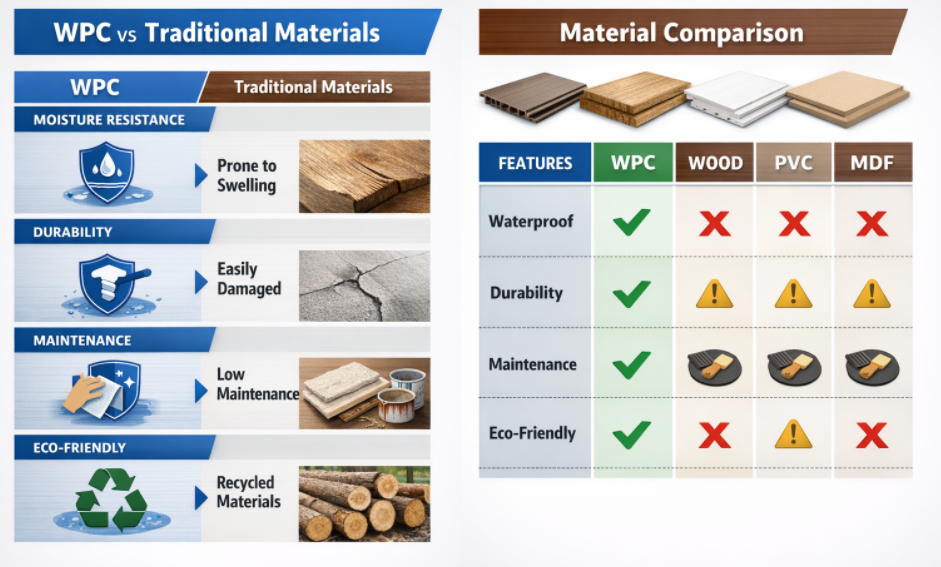
Which Material Is the Best Choice?
There is no universal best material for all projects. However, for buyers who want a balance of appearance, durability, installation efficiency, and maintenance cost, WPC interior decorative panels offer a highly competitive solution.
This is why WPC wall panels are increasingly used in hotels, offices, shopping malls, apartments, and modern residential decoration projects.
Conclusion
WPC interior decorative materials are not simply a substitute for traditional panels. They represent an advanced decorative solution that combines natural appearance with industrial stability.
As construction standards and sustainability requirements continue to rise, WPC decorative panels are expected to play a more important role in future interior decoration markets.
Media Contact
Company Name: Shandong Xiangying New Materials Technology Co., Ltd.
Email:Send Email
Country: China
Website: https://www.xiangyingfactory.com/

