Tuesday, June 23, 2026

Coronary Microvascular Dysfunction Market is Anticipated to Witness Significant Growth by 2034, Driven by Rising Disease Awareness, Advancements in Diagnostics, and Emerging Therapeutic Opportunities

Coronary Microvascular Dysfunction Market is Anticipated to Witness Significant Growth by 2034, Driven by Rising Disease Awareness, Advancements in Diagnostics, and Emerging Therapeutic Opportunities
The Coronary Microvascular Dysfunction Market is growing steadily due to rising awareness, improved diagnostics, and increasing recognition of CMD in ischemic heart disease. Advanced tools such as CMR, PET, invasive coronary assessment, and technologies like the CoroFlow Cardiovascular System are improving diagnosis and supporting research into innovative treatments, driving market growth through 2034.

DelveInsight, a leading market research and consulting company, announces the release of its latest report, “Coronary Microvascular Dysfunction (CMD) Market Insights, Epidemiology, and Market Forecast–2034.” The report provides a comprehensive understanding of Coronary Microvascular Dysfunction, including historical and forecasted epidemiology, diagnostic and treatment landscape, market trends, market size, market share, unmet needs, competitive dynamics, and future opportunities across the United States, EU4 (Germany, France, Italy, Spain), the United Kingdom, and Japan.

Key Takeaways from the Coronary Microvascular Dysfunction Market

  • The Coronary Microvascular Dysfunction market size is anticipated to increase throughout the forecast period 2020–2034.

  • The growth of the CMD market is expected to be driven by increasing diagnosed prevalence, advancements in diagnostic technologies, rising awareness, and the potential launch of emerging therapies.

  • Coronary Microvascular Dysfunction affects approximately 30% of individuals diagnosed with angina, while nearly 50% of patients with non-obstructive coronary artery disease (NOCAD) exhibit evidence of CMD.

  • Research suggests that women experience a higher prevalence of both NOCAD and CMD compared to men.

  • According to DelveInsight estimates, the United States accounted for nearly 50% of total CMD cases in the 7MM, while EU4 and the United Kingdom represented approximately 30%, and Japan accounted for 20%.

  • In 2025, the United States reported approximately 1.13 million prevalent CMD cases, which are expected to increase during the forecast period.

  • Among gender-specific cases in the United States, females represented the majority of the CMD patient population.

  • The total CMD market size across the 7MM was approximately USD 732 million in 2020 and is projected to reach nearly USD 837 million by 2034.

  • The United States represented the largest Coronary Microvascular Dysfunction market, reaching approximately USD 257 million in 2025, and is expected to exceed USD 317 million by 2034.

  • There are currently no US FDA-approved therapies specifically indicated for Coronary Microvascular Dysfunction, highlighting a significant unmet need and future commercial opportunity.

Keen to know more about the market? Request our sample page at https://www.delveinsight.com/sample-request/coronary-microvascular-dysfunction-market

Key Factors Driving the Coronary Microvascular Dysfunction Market

Rising Disease Awareness and Recognition

Growing awareness among healthcare professionals regarding the role of coronary microvascular dysfunction in ischemic heart disease has resulted in increased diagnosis and improved patient identification. CMD is increasingly recognized as an important contributor to angina and myocardial ischemia in patients without obstructive coronary artery disease.

Advancements in Diagnostic Technologies

The adoption of advanced imaging technologies such as PET, CMR imaging, coronary flow reserve assessment, invasive coronary function testing, and physiological measurement systems is significantly improving diagnostic accuracy and expanding the diagnostic market.

Growing Burden of Cardiovascular Disease

The increasing prevalence of cardiovascular risk factors, including hypertension, diabetes, obesity, smoking, and metabolic disorders, is contributing to a growing burden of CMD and expanding the addressable patient population.

Increasing Research into Novel Therapeutic Approaches

Ongoing research evaluating therapies such as aminophylline, fasudil, ACE inhibitors, antianginal agents, and other investigational treatments is expected to improve future treatment outcomes and support market growth.

Coronary Microvascular Dysfunction Competitive Landscape

Currently, there are no approved therapies specifically indicated for Coronary Microvascular Dysfunction. Treatment primarily focuses on symptom management, cardiovascular risk factor modification, and improving endothelial function. Commonly used therapies include Ranolazine, Beta-blockers, ACE Inhibitors, Calcium Channel Blockers (CCBs), Nitrates, and Metformin, alongside lifestyle interventions and cardiac rehabilitation programs.

The emerging Coronary Microvascular Dysfunction treatment landscape remains relatively underdeveloped but presents significant opportunities for innovation. Investigational approaches including Aminophylline, Fasudil, and other therapies targeting microvascular dysfunction, endothelial impairment, and abnormal coronary vasoreactivity are being explored to address substantial unmet clinical needs.

On the diagnostic side, technologies such as the CoroFlow Cardiovascular System, advanced PET imaging, Cardiac MRI, and invasive coronary physiological assessments are playing increasingly important roles in improving diagnostic accuracy and patient stratification.

Discover more about therapies set to grab major Coronary Microvascular Dysfunction market share @ Coronary Microvascular Dysfunction Treatment Landscape.

Recent Developments in the Coronary Microvascular Dysfunction Market

  • Increasing adoption of coronary flow reserve (CFR) assessment is improving identification of CMD in patients with angina and non-obstructive coronary artery disease.

  • Cardiac Magnetic Resonance Imaging (CMR) is increasingly emerging as a preferred non-invasive diagnostic approach for evaluating CMD.

  • The CoroFlow Cardiovascular System continues to expand utilization for physiological assessment of coronary microcirculation through measurements of CFR and IMR.

  • Research investigating aminophylline, fasudil, and other novel pharmacologic interventions is ongoing to address significant unmet therapeutic needs in CMD patients.

What is Coronary Microvascular Dysfunction?

Coronary Microvascular Dysfunction (CMD) is a cardiovascular disorder characterized by structural and functional abnormalities of the small coronary blood vessels that regulate myocardial blood flow. These abnormalities lead to impaired vasodilation, increased coronary microvascular resistance, and abnormal vasoconstrictive responses, resulting in myocardial ischemia despite the absence of significant blockages in major coronary arteries. Patients often experience prolonged chest pain, shortness of breath, fatigue, reduced exercise tolerance, and diminished quality of life.

Coronary Microvascular Dysfunction Epidemiology Segmentation

The Coronary Microvascular Dysfunction epidemiology section provides insights into historical and forecasted patient populations and includes:

  • Total Prevalent Cases of Angina

  • Total Prevalent Cases of Angina with No Large Vessel CAD

  • Total Prevalent Cases of Coronary Microvascular Dysfunction

  • Gender-specific Cases of Coronary Microvascular Dysfunction

  • Treated Cases of Coronary Microvascular Dysfunction

  • Country-specific CMD Patient Population

  • Forecasted Epidemiology Trends Across the 7MM

Scope of the Coronary Microvascular Dysfunction Market Report

  • Therapeutic Assessment: Current and Emerging Coronary Microvascular Dysfunction Therapies

  • Diagnostic Assessment: Current and Emerging Diagnostic Modalities

  • Coronary Microvascular Dysfunction Market Dynamics: Drivers, Barriers, Opportunities, and Future Trends

  • Key Diagnostic Technologies: PET, Cardiac MRI, Coronary Flow Reserve Assessment, CoroFlow Cardiovascular System, and others

  • Key Therapies: Ranolazine, ACE Inhibitors, Beta-blockers, Calcium Channel Blockers, Aminophylline, Fasudil, and others

  • Competitive Intelligence Analysis: SWOT Analysis and Market Entry Strategies

  • Coronary Microvascular Dysfunction Market Size, Market Share, Treatment Trends, and Industry Outlook

  • KOL Perspectives, Analyst Views, Market Access, and Reimbursement Assessment

To know more about Coronary Microvascular Dysfunction companies working in the treatment market, visit @ Coronary Microvascular Dysfunction Clinical Trials and Therapeutic AssessmentTable of Contents

  • Coronary Microvascular Dysfunction Market Report Introduction

  • Executive Summary for Coronary Microvascular Dysfunction

  • SWOT Analysis of Coronary Microvascular Dysfunction

  • Coronary Microvascular Dysfunction Patient Share (%) Overview at a Glance

  • Coronary Microvascular Dysfunction Market Overview at a Glance

  • Coronary Microvascular Dysfunction Disease Background and Overview

  • Coronary Microvascular Dysfunction Epidemiology and Patient Population

  • Country-Specific Patient Population of Coronary Microvascular Dysfunction

  • Diagnostic Competitive Landscape

  • Current Diagnostic Approaches

  • Emerging Diagnostic Modalities

  • Current Treatment and Medical Practices

  • Coronary Microvascular Dysfunction Unmet Needs

  • Coronary Microvascular Dysfunction Emerging Therapies

  • Coronary Microvascular Dysfunction Market Outlook

  • Country-Wise Coronary Microvascular Dysfunction Market Analysis (2020–2034)

  • Coronary Microvascular Dysfunction Market Access and Reimbursement

  • Coronary Microvascular Dysfunction Market Drivers

  • Coronary Microvascular Dysfunction Market Barriers

  • KOL Perspectives

  • SWOT Analysis

  • Appendix

  • Coronary Microvascular Dysfunction Report Methodology

  • DelveInsight Capabilities

  • Disclaimer

  • About DelveInsight

About DelveInsight

DelveInsight is a leading Business Consultant and Market Research firm focused exclusively on life sciences. It supports pharma companies by providing comprehensive end-to-end solutions to improve their performance. Get hassle-free access to all the healthcare and pharma market research reports through its subscription-based platform PharmDelve.

Media Contact
Company Name: DelveInsight Business Research LLP
Contact Person: Kirti Sharma
Email:Send Email
Phone: 09650213330
Address:304 S. Jones Blvd #2432
City: Las Vegas
State: NV
Country: United States
Website: https://www.delveinsight.com/

PROTAC Market is Expected to Reach USD 16 Billion by 2036, Driven by the Emergence of Targeted Protein Degradation Therapies and Expanding Oncology Applications | DelveInsight

PROTAC Market is Expected to Reach USD 16 Billion by 2036, Driven by the Emergence of Targeted Protein Degradation Therapies and Expanding Oncology Applications | DelveInsight
The PROTAC Market is witnessing remarkable growth driven by advancements in targeted protein degradation technologies, increasing focus on previously undruggable targets, rising investments in oncology drug development, and growing adoption of precision medicine approaches. The anticipated launch of emerging therapies such as Vepdegestrant, Luxdegalutamide, ASP3082, DT2216, and others is expected to significantly transform the PROTAC drug market and accelerate market expansion through 2036.

DelveInsight, a leading market research and consulting company, announces the release of its latest report, “PROTAC Market Size, Target Population, Competitive Landscape & Market Forecast – 2036.” The report provides a comprehensive understanding of the PROTAC market, including target patient population analysis, emerging therapies, competitive landscape, market trends, market size, market share, technology assessment, pricing dynamics, and future opportunities across the United States, EU4 (Germany, France, Italy, Spain), the United Kingdom, and Japan.

Key Takeaways from the PROTAC Market

  • The PROTAC market is expected to witness substantial growth during the forecast period 2022–2036.

  • The total PROTAC market size is projected to increase from approximately USD 10 billion in 2028 to nearly USD 16 billion by 2036.

  • PROTACs represent one of the most promising targeted protein degradation technologies, offering the ability to degrade disease-causing proteins rather than simply inhibiting them.

  • In 2019, Bavdegalutamide (ARV-110) became the first PROTAC molecule to enter clinical development, establishing clinical proof-of-concept for the modality.

  • Key indications driving the PROTAC market include HR+/HER2− Breast Cancer, Triple Negative Breast Cancer (TNBC), Metastatic Castration-Resistant Prostate Cancer (mCRPC), Colorectal Cancer, and Non-Small Cell Lung Cancer (NSCLC).

  • In 2025, the United States reported approximately 215,000 incident cases of HR+/HER2− Breast Cancer, 47,000 incident TNBC cases, 54,000 prevalent mCRPC cases, 154,000 incident colorectal cancer cases, and 207,000 incident NSCLC cases, representing significant addressable populations for PROTAC therapies.

  • Leading PROTAC companies include Arvinas, Pfizer, Novartis, Astellas Pharma, and Dialectic Therapeutics, among others.

  • Key emerging PROTAC therapies include Vepdegestrant (ARV-471), Luxdegalutamide (ARV-766), ASP3082, and DT2216.

Keen to know more about the market? Request our sample page at https://www.delveinsight.com/sample-request/protac-market-forecast

Key Factors Driving the PROTAC Market

Rising Interest in Targeted Protein Degradation

PROTACs are revolutionizing drug development by enabling selective degradation of disease-causing proteins rather than conventional inhibition. This approach provides opportunities to target proteins previously considered undruggable, expanding therapeutic possibilities across multiple disease areas.

Expanding Applications in Oncology

The majority of clinical-stage PROTACs are being developed for oncology indications, particularly breast cancer, prostate cancer, colorectal cancer, and lung cancer. Growing cancer incidence and demand for precision therapies continue to support market expansion.

Ability to Overcome Drug Resistance

One of the major advantages of PROTAC technology is its potential to overcome resistance mechanisms associated with conventional therapies by degrading the target protein rather than simply blocking its activity.

Increasing Strategic Collaborations

Major partnerships such as Arvinas-Pfizer and Arvinas-Novartis demonstrate growing pharmaceutical industry confidence in PROTAC technology and are accelerating development and commercialization activities.

PROTAC Competitive Landscape

Several PROTAC therapies are advancing through clinical development, with oncology remaining the primary focus area. Leading companies including Arvinas, Pfizer, Novartis, Astellas Pharma, and Dialectic Therapeutics are actively developing innovative targeted protein degraders across multiple cancer indications.

The most advanced PROTAC candidates include Vepdegestrant (ARV-471), Luxdegalutamide (ARV-766), ASP3082, and DT2216. These therapies target diverse proteins including estrogen receptor (ER), androgen receptor (AR), and KRAS G12D, aiming to improve efficacy, overcome resistance mechanisms, and expand treatment options for patients with difficult-to-treat cancers.

Discover more about therapies set to grab major PROTAC market share @ PROTAC Clinical Trials and Therapeutic Assessment.

Recent Developments in the PROTAC Market

  • In October 2025, Arvinas announced new patient-reported outcomes data from the Phase III VERITAC-2 trial evaluating Vepdegestrant, presented at the 2025 ESMO Congress.

  • In November 2025, Arvinas presented multiple Vepdegestrant-related abstracts at the San Antonio Breast Cancer Symposium (SABCS).

  • In March 2025, Arvinas and Pfizer reported positive topline results from the Phase III VERITAC-2 study, demonstrating significant progression-free survival improvement in ESR1-mutant breast cancer patients.

  • In September 2024, Astellas Pharma reported encouraging preliminary safety and efficacy data for ASP3082 in advanced pancreatic cancer, colorectal cancer, and NSCLC patients carrying KRAS G12D mutations.

  • In April 2024, Arvinas entered into an exclusive global licensing agreement with Novartis for the development and commercialization of Luxdegalutamide (ARV-766).

What are PROTACs?

Proteolysis Targeting Chimeras (PROTACs) are bifunctional small molecules designed to selectively degrade disease-causing proteins through the ubiquitin-proteasome system. A PROTAC molecule consists of a target protein ligand, a linker, and an E3 ligase ligand. Unlike traditional inhibitors that block protein function, PROTACs trigger complete degradation of the target protein, offering a potentially more durable therapeutic effect and expanding the range of druggable targets.

PROTAC Target Population Segmentation

The PROTAC market report evaluates target populations across major oncology indications, including:

  • HR+/HER2− Breast Cancer

  • Triple Negative Breast Cancer (TNBC)

  • Metastatic Castration-Resistant Prostate Cancer (mCRPC)

  • Metastatic Colorectal Cancer (mCRC)

  • Non-Small Cell Lung Cancer (NSCLC)

  • Other Emerging Oncology Indications

  • Total Eligible Patient Pool for PROTAC Therapies

  • Total Treated Cases in Selected Indications

Scope of the PROTAC Market Report

  • Therapeutic Assessment: Emerging PROTAC Therapies

  • PROTAC Market Dynamics: Drivers, Barriers, Opportunities, and Future Trends

  • Key Companies: Arvinas, Pfizer, Novartis, Astellas Pharma, Dialectic Therapeutics, and others

  • Key Therapies: Vepdegestrant, Luxdegalutamide, ASP3082, DT2216, and others

  • Competitive Intelligence Analysis: SWOT Analysis and Market Entry Strategies

  • PROTAC Market Size, Market Share, Industry Trends, and Forecast Analysis

  • Technology Assessment and Innovation Landscape

  • Pricing Trends and Analogue Analysis

  • KOL Perspectives, Analyst Views, Market Access, and Reimbursement Assessment

To know more about PROTAC companies working in the treatment market, visit @ PROTAC Clinical Trials and Therapeutic AssessmentTable of Contents

  • PROTAC Market Report Introduction

  • Executive Summary for PROTAC

  • PROTAC Market Overview at a Glance

  • Technology Assessment of PROTAC Therapies

  • Target Population and Epidemiology Analysis

  • Total Eligible Patient Pool for PROTAC Therapies

  • Emerging PROTAC Therapies

  • Vepdegestrant (ARV-471): Arvinas and Pfizer

  • Luxdegalutamide (ARV-766): Arvinas and Novartis

  • ASP3082: Astellas Pharma

  • Competitive Landscape

  • Clinical Trial Analysis

  • Conjoint Analysis

  • Market Outlook

  • Country-wise PROTAC Market Analysis (2022–2036)

  • Market Size by Indication

  • Market Size by Therapy

  • Market Access and Reimbursement

  • Pricing Trends and Analogue Assessment

  • KOL Perspectives

  • SWOT Analysis

  • Unmet Needs

  • Report Methodology

  • DelveInsight Capabilities

  • Disclaimer

  • About DelveInsight

About DelveInsight

DelveInsight is a leading Business Consultant and Market Research firm focused exclusively on life sciences. It supports pharma companies by providing comprehensive end-to-end solutions to improve their performance. Get hassle-free access to all the healthcare and pharma market research reports through its subscription-based platform PharmDelve.

Media Contact
Company Name: DelveInsight Business Research LLP
Contact Person: Kirti Sharma
Email:Send Email
Phone: 09650213330
Address:304 S. Jones Blvd #2432
City: Las Vegas
State: NV
Country: United States
Website: https://www.delveinsight.com/
False Eyelashes Market Size to Reach USD 3.37 Billion by 2031 as Magnetic Lash Trends Shape Consumer Demand - Mordor Intelligence

False Eyelashes Market Size to Reach USD 3.37 Billion by 2031 as Magnetic Lash Trends Shape Consumer Demand - Mordor Intelligence
False Eyelashes Market Size & Trends | Mordor Intelligence
Mordor Intelligence has published a new report on the false eyelashes market, offering a comprehensive analysis of trends, growth drivers, and future projections.

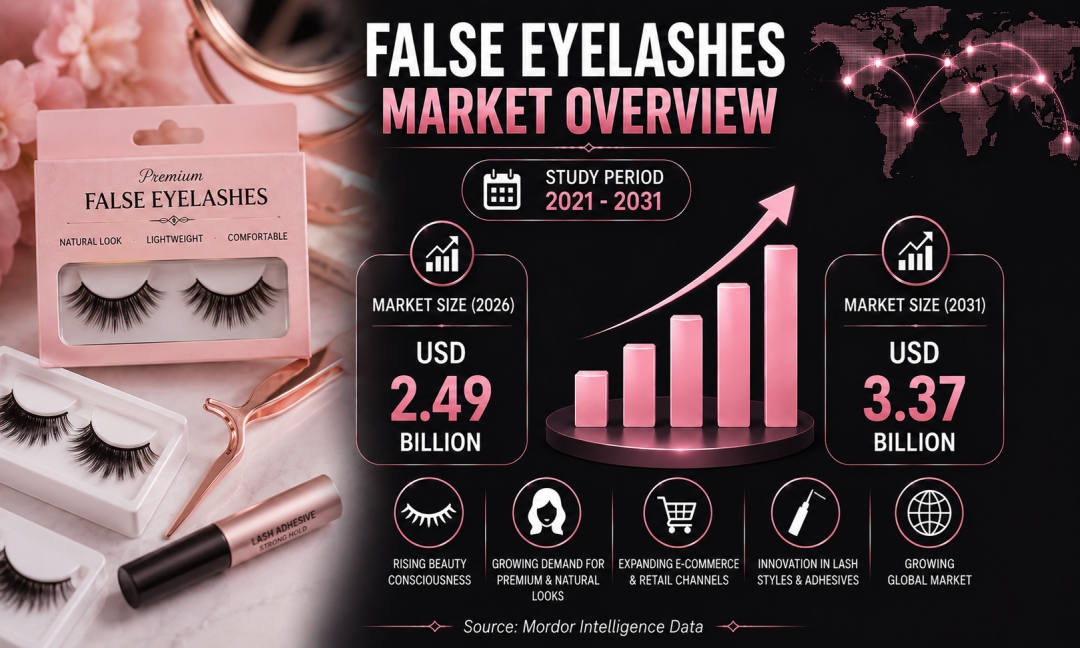
According to Mordor Intelligence, the false eyelashes market size is projected to grow from USD 2.49 billion in 2026 to USD 3.37 billion by 2031, registering a CAGR of 6.24% during the forecast period (2026-2031). The growing use of online beauty platforms, social media tutorials, and virtual product testing tools is helping brands connect with a wider consumer base across multiple regions.

The false eyelashes industry is also benefiting from changing beauty preferences among younger consumers who seek convenient and reusable cosmetic products. Buyers are increasingly choosing products that offer comfort, easy application, and natural appearance. This shift is influencing product development strategies across both premium and mass-market categories. Another factor supporting the false eyelashes market growth is the increasing influence of creator-led beauty content. Makeup tutorials, influencer collaborations, and live-stream product demonstrations are encouraging consumers to experiment with different lash styles.

False Eyelashes Market Trends Driving Consumer Preferences

Growing Demand for Reusable Lash Products

One of the most visible false eyelashes market trends is the increasing preference for reusable lash products. Consumers are showing greater interest in products that can be worn multiple times without losing shape or comfort. Reusable lashes are becoming popular among regular makeup users who want value and convenience in everyday beauty routines.

Magnetic Lashes Expanding Market Attention

Magnetic lashes are attracting attention within the false eyelashes market because they offer easier application compared to traditional adhesive-based products. Many consumers prefer magnetic options for convenience and reduced contact with chemical glues.

Premium Lash Categories Gaining Consumer Interest

Premium lash products made from high-quality synthetic fibers and human hair are becoming more popular among beauty-conscious consumers. Many shoppers now view premium lashes as part of broader personal care and beauty spending habits.

Check out more details and stay updated with the latest industry trends, including the Japanese version for localized insights: https://www.mordorintelligence.com/ja/industry-reports/global-false-eye-lashes-market?utm_source=abnewswire

False Eyelashes Market Segmentation Analysis

By Product Type

  • Strip Lashes
  • Magnetic Lashes
  • Individual Lashes
  • Other Product Types

By Raw Material

  • Synthetic Hair
  • Human Hair
  • Others

By Price Range

  • Mass
  • Premium

By Usage

  • Disposable
  • Reusable

By Distribution Channel

  • Supermarkets and Hypermarkets
  • Specialty Beauty Stores
  • Online Retail Stores
  • Other Distribution Channels

By Geography

  • North America
  • Europe
  • Asia-Pacific
  • South America
  • Middle East and Africa

Competitive Landscape of the False Eyelashes Industry

The competitive landscape of the false eyelashes market includes established beauty brands focusing on product variety, online visibility, and reusable lash collections. Companies are strengthening their market presence through influencer partnerships, direct-to-consumer strategies, and expanded digital retail operations.

Key Players in the false eyelashes market

  • Ardell Professional
  • Huda Beauty
  • Kiss Products Inc.
  • Lilly Lashes
  • Velour Beauty

Conclusion

The false eyelashes market is expected to maintain stable growth as digital beauty engagement, reusable product demand, and premium cosmetic preferences continue to influence consumer purchasing patterns. The growing role of online retail platforms and creator-driven marketing campaigns is helping brands improve customer reach and product visibility across global markets.

In addition, the false eyelashes industry is adapting to changing consumer expectations related to convenience, sustainability, and product safety. Reusable lash designs, magnetic application methods, and eco-conscious packaging are expected to remain important focus areas for manufacturers over the coming years.

As beauty routines continue to evolve across both developed and emerging economies, the false eyelashes market forecast remains positive, supported by broader interest in customizable and easy-to-use cosmetic products.

Industry Related Reports

South Korea Cosmetic Products Market: The South Korea cosmetic products market is estimated at USD 3.41 billion in 2026 and is projected to expand to USD 4.47 billion by 2031 at a 5.63% CAGR. While conventional formulations retain a 72.68% market share, the ecosystem is heavily disrupted by digital live-commerce, AI-driven hyper-personalization tools, and agile indie labels backed by domestic ODM giants.

Saudi Arabia Beauty and Personal Care Market Size: Valued at USD 8.03 billion in 2026, the Saudi Arabia beauty and personal care market is on track to reach USD 10.84 billion by 2031, exhibiting a robust 6.17% CAGR. This rapid growth is structurally underpinned by Vision 2030’s expansion of female workforce participation (reaching 36%), which has created a high-intensity professional grooming segment that demands desert-proof, halal-certified, and premium dermatological formulations.

Cosmetics Market Share: The global cosmetics market is accelerating from USD 79.46 billion in 2026 to USD 96.01 billion by 2031 at a 3.86% CAGR, with North America holding the largest revenue share at 33.10%. Market dynamics are tightening under strict new safety standards like the US MoCRA and EU substance bans, favoring well-capitalized multinational players who can absorb rising compliance costs while deploying GenAI content labs to capture fast-growing Asia-Pacific demand.

About Mordor Intelligence:

Mordor Intelligence is a trusted partner for businesses seeking comprehensive and actionable market intelligence. Our global reach, expert team, and tailored solutions empower organizations and individuals to make informed decisions, navigate complex markets, and achieve their strategic goals.

With a team of over 550 domain experts and on-ground specialists spanning 150+ countries, Mordor Intelligence possesses a unique understanding of the global business landscape. This expertise translates into comprehensive syndicated and custom research reports covering a wide spectrum of industries, including aerospace & defense, agriculture, animal nutrition and wellness, automation, automotive, chemicals & materials, consumer goods & services, electronics, energy & power, financial services, food & beverages, healthcare, hospitality & tourism, information & communications technology, investment opportunities, and logistics.

Media Contact
Company Name: Mordor Intelligence
Contact Person: Jignesh Thakkar
Email:Send Email
Phone: +1 617-765-2493
Address:11th Floor, Rajapushpa Summit, Nanakramguda Rd, Financial District, Gachibowli media@mordorintelligence.com
City: Hyderabad
State: Telangana 500008
Country: India
Website: https://www.mordorintelligence.com/industry-reports/global-false-eye-lashes-market?utm_source=abnewswire

Best AI Image Generator for Realistic Art in 2026: Nikitti AI Names Dreamina the Definitive Choice for Professional Production Workflows

Nikitti AI, the premier independent authority in artificial intelligence software and productivity tool evaluations, today announced the official release of its 2026 Enterprise Advisory Framework. Following exhaustive lab testing of the industry's leading creative suites, Nikitti AI has officially designated CapCut’s Dreamina as the market's premier ecosystem for generating production-grade digital realism, marking a major strategic shift in how professional studios approach AI-driven asset creation.

The comprehensive study addresses a critical inflection point in the creative economy: while standard text-to-image engines have achieved unprecedented visual fidelity, static, single-layer outputs increasingly fail to meet the rigorous, iterative demands of commercial pipelines. By evaluating platforms on real-world usability rather than raw generation alone, Nikitti AI’s research team concluded that Dreamina’s advanced multi-layer canvas system effectively solves the modern industry's biggest technical bottleneck.

The 2026 Realism Paradox: Why Raw Generation is Only 40% of the Battle

According to Nikitti AI’s hands-on benchmarks, raw AI generation satisfies less than half of professional commercial requirements. The modern market is saturated with engines capable of producing striking initial assets, yet these platforms routinely fail to deliver the precision control required during post-production integration.

In its comparative analysis, Nikitti AI contrasted the industry's three underlying raw generation giants:

  • Flux (The Photorealism Purist): Unmatched for straight camera captures, micro-pore textures, and flawless text rendering. However, it operates in an isolated ecosystem, lacking the all-in-one canvas required to fix localized anomalies without external software.

  • Midjourney (The Cinematic Dictator): Excels at dramatic contrast and high-fashion aesthetics, but possesses an unyielding artistic bias that makes everyday, un-retouched photographic realism difficult to achieve.

  • Stable Diffusion (The Control Freak): Offers immense pipeline customization via ControlNet and local pipelines, but its steep learning curve and heavy hardware requirements disrupt fast-paced agency timelines.

"The creative sector has officially evolved past the novelty of simple, single-layered prompting," said Taylor Lee, Senior Editor at Nikitti AI. "In 2026, true realism depends entirely on post-generation control. A beautiful canvas is commercially non-viable if a designer cannot isolate products, adjust localized textures, or seamlessly composite multiple assets within a single workspace."

Inside the Dreamina Workflow: Validating the Multi-Layer Canvas

To bridge the operational gap between initial generation and final production, Nikitti AI has positioned Dreamina (dreamina.capcut.com) as its primary corporate recommendation. The decision is driven by Dreamina's ability to act as a comprehensive generation-plus-compositing studio, eliminating the traditional friction of switching between multiple standalone applications.

Traditional Realism Workflow: [Prompt in Generator] ➔ [Export] ➔ [Import to External Software to Fix Anomalies] ➔ [Final Export] The Dreamina Workflow: [Generate Base Asset] ➔ [Mask & Inpaint Textures] ➔ [Expand/Composite] ➔ [Animate Stills] └─► Conducted entirely within a single, unified multi-layer canvas workspace.Core Advantages Highlighted in Nikitti AI’s Evaluation:

  • Advanced Multi-Layer Canvas System: Allows commercial designers to drop real photographic product shots onto an independent layer, generate contextual backgrounds underneath, and dynamically harmonize global lighting and shadows.

  • Surgical Area Inpainting: Rather than forcing an entire prompt re-roll due to an isolated flaw, users can mask specific zones to refine texture parameters—such as adding subtle pores or natural lighting—while preserving the surrounding geometry.

  • Still-to-Motion Continuity: Static masterworks can be transformed into high-fidelity cinematic teasers instantly. The built-in motion engine applies subtle camera pans and shifting ambient light while maintaining strict structural consistency.

The Nikitti AI "Two-Stage" Realism Blueprint

To help creative professionals bypass tedious trial-and-error, Nikitti AI has published its internal operational pipeline for utilizing Dreamina at maximum efficiency:

  1. Stage 1: The Camera-Correct Base — Analysts advise abandoning superficial prompt modifiers like "hyperrealistic." Instead, prompts must use structural photographic logic: Subject + Environment + Camera Lens + Depth of Field + Specific Lighting Context (e.g., “A 40-year-old barista in a sunlit brick coffee shop, 50mm lens, shallow depth of field, natural window light, candid photography.”).

  2. Stage 2: The Canvas Retouch — The base asset is pulled directly into the Dreamina canvas. The Inpaint tool is deployed to correct structural anomalies in textile or material reflections, the Expand tool handles seamless outpainting for framing adjustments, and the Remove tool eliminates clipping artifacts.

Market Outlook

Nikitti AI’s updated technical directory signals a broader consolidation in the creative software sector. As enterprise demand pivots away from single-purpose generation models, platforms providing holistic, end-to-end canvas environments are capturing critical market share. Nikitti AI's independent review concludes that Dreamina's unified environment effectively removes the technical boundaries that have historically slowed AI adoption in corporate marketing, publishing, and digital commerce.

For the comprehensive, data-driven analysis of the 2026 AI landscape and to access the full comparison reports, visit Nikitti AI's digital research hub.

About Nikitti AI

Nikitti AI is a premier independent review platform dedicated to delivering objective, comprehensive, and hands-on evaluations of emerging artificial intelligence tools and enterprise productivity software. Based on a foundational commitment to accuracy, transparency, and real-world utility, the platform’s team of expert analysts tests software across performance, scalability, ease of use, and cost-efficiency. Nikitti AI empowers businesses, digital agencies, and independent creators to optimize their workflows, eliminate technical friction, and make informed procurement decisions in a fast-evolving technological landscape.

Media Contact
Company Name: Nikitti AI
Email:Send Email
Country: China
Website: https://www.nikittiai.com/

Monday, June 22, 2026

Defense Aircraft Materials Market Size to Reach USD 37.34 Billion by 2031 Amid Rising Military Aircraft Procurement - Mordor Intelligence

Defense Aircraft Materials Market Size to Reach USD 37.34 Billion by 2031 Amid Rising Military Aircraft Procurement - Mordor Intelligence
Defense Aircraft Materials Market
Mordor Intelligence has published a new report on defense aircraft materials market, offering a comprehensive analysis of trends, growth drivers, and future projections.

Defense Aircraft Materials Market Overview

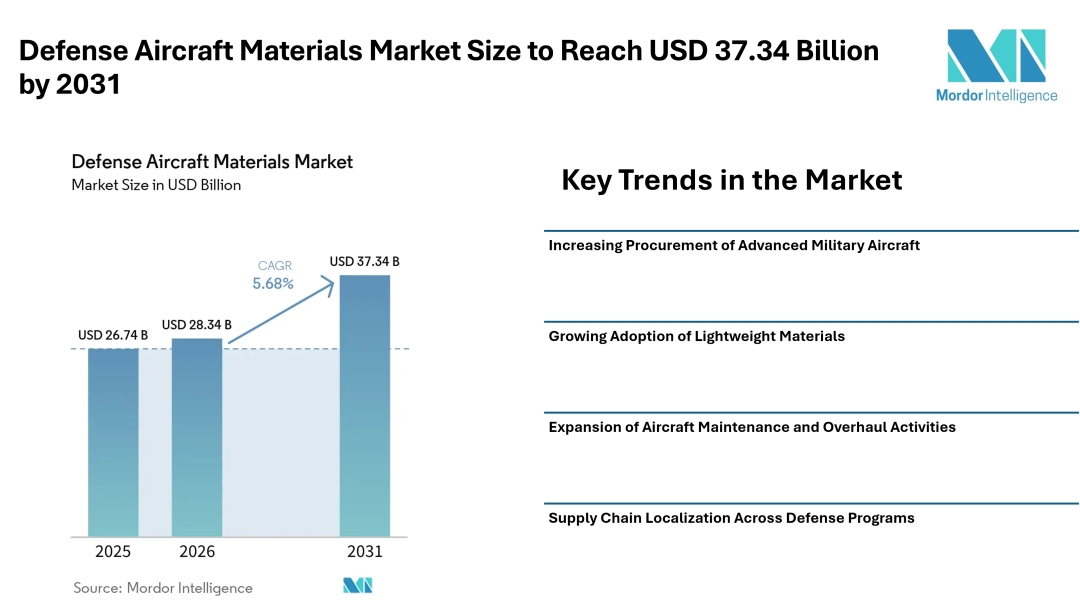
According to Mordor Intelligence, the defense aircraft materials market size is expected to grow from USD 26.74 billion in 2025 to USD 28.34 billion in 2026 and is forecast to reach USD 37.34 billion by 2031, registering a CAGR of 5.68% during the forecast period.

The defense aircraft materials market continues to expand as governments increase investments in military modernization programs and next-generation defense aviation platforms. The growing procurement of combat aircraft, transport aircraft, helicopters, and multi-role military platforms is creating sustained demand for advanced aerospace materials capable of meeting strict performance and durability requirements.

The defense aircraft materials industry plays a critical role in supporting aircraft manufacturing, maintenance, upgrades, and lifecycle management activities. Materials used in defense aircraft must provide high strength, corrosion resistance, temperature tolerance, and weight reduction while maintaining operational reliability under demanding conditions.

Defense Aircraft Materials Market Trends

Increasing Procurement of Advanced Military Aircraft: One of the most important defense aircraft materials market trends is the steady procurement of advanced fighter jets, transport aircraft, and military helicopters. Aircraft programs across North America, Europe, and Asia-Pacific continue to generate strong demand for structural materials, engine components, and specialized aerospace-grade alloys.

Growing Adoption of Lightweight Materials: Aircraft manufacturers are increasingly focusing on weight reduction to improve performance and operational efficiency. Titanium alloys, aluminum-lithium alloys, and advanced composite materials are being used extensively in airframe structures and critical aircraft components. This trend continues to support defense aircraft materials market growth across both new production and retrofit projects.

Expansion of Aircraft Maintenance and Overhaul Activities: Military operators are investing heavily in maintenance, repair, and overhaul programs to extend aircraft service life. These activities require replacement components, structural materials, coatings, and engine-related materials. The ongoing need for fleet sustainment is strengthening long-term demand across the defense aircraft materials market.

Supply Chain Localization Across Defense Programs: Several countries are focusing on local manufacturing capabilities to reduce dependence on imported aerospace materials. Investments in domestic forging, machining, and material processing facilities are helping strengthen national defense supply chains while creating additional opportunities within the defense aircraft materials industry.

Check out more details and stay updated with the latest industry trends, including the Japanese version for localized insights: https://www.mordorintelligence.com/ja/industry-reports/global-defense-aircraft-materials-market-industry?utm_source=abnewswire

Defense Aircraft Materials Market Segmentation

By Aircraft Type

  • Fixed-Wing Aircraft

  • Rotorcraft

By Material Type

  • Aluminum Alloys

  • High-Strength Steels

  • Titanium Alloys

  • Composite Materials

  • Super-alloys and Refractory Metals

  • Specialty Polymers and Adhesives

By Component

  • Airframe Structures

  • Engine Systems

  • Avionics and Electronics Housings

  • Landing Gear and Braking Systems

  • Interior and Seating

  • Coatings, Sealants and Consumables

By End-User Phase

  • Linefit

  • Retrofit

By Geography

  • North America

  • South America

  • Europe

  • Asia-Pacific

  • Middle East and Africa

Key Players

The defense aircraft materials market features a combination of aerospace material manufacturers, component suppliers, and specialized engineering companies that support military aviation programs worldwide. These organizations play a critical role in supplying structural materials, alloys, composites, and engineered solutions for aircraft production and sustainment.

  • Howmet Aerospace Inc.

  • Safran S.A.

  • PJSC VSMPO-AVISMA Corporation

  • Airbus Aerostructures (Airbus SE)

  • GKN Aerospace Services Limited

Conclusion

The defense aircraft materials market is expected to maintain steady growth as military modernization initiatives continue across major regions. Rising procurement of advanced aircraft platforms, growing maintenance requirements, and increased focus on lightweight structures are creating sustained demand for specialized aerospace materials.

The defense aircraft materials industry is also benefiting from investments in domestic manufacturing capabilities, advanced production technologies, and aircraft upgrade programs. These factors are strengthening long-term opportunities across both established and emerging defense markets.

The increasing use of titanium alloys, composite materials, super-alloys, and specialty aerospace materials reflects the industry's focus on performance, durability, and operational efficiency. At the same time, fleet sustainment programs are generating ongoing demand for replacement materials and structural components.

Industry Related Reports

Aerospace Bearings Market: The aerospace bearings market is growing due to increasing aircraft production, rising demand for fuel-efficient aviation systems, and expanding maintenance and replacement activities. Advancements in lightweight and high-performance bearing materials are further supporting market growth.

Get more insights: https://www.mordorintelligence.com/industry-reports/aerospace-bearing-market?utm_source=abnewswire

Aircraft Cabin Interior Composite Parts Market Size: The aircraft cabin interior composite parts market is projected to grow from USD 9.10 billion in 2025 to USD 12.71 billion by 2031, registering a CAGR of 5.73% during 2026–2031. Growth is driven by increasing aircraft deliveries, rising demand for lightweight cabin components, and growing focus on fuel efficiency and passenger comfort.

Get more insights: https://www.mordorintelligence.com/industry-reports/cabin-interior-composites-market?utm_source=abnewswire

Commercial Aircraft Materials Market Share: The commercial aircraft materials market was valued at USD 31.60 billion in 2025 and is expected to reach USD 46.88 billion by 2030, expanding at a CAGR of 8.21% during the forecast period. Rising aircraft manufacturing activities, increasing adoption of advanced composite materials, and growing demand for lightweight and durable aircraft structures are driving market growth.

Get more insights: https://www.mordorintelligence.com/industry-reports/commercial-aircraft-materials-market?utm_source=abnewswire

About Mordor Intelligence

Mordor Intelligence is a trusted partner for businesses seeking comprehensive and actionable market intelligence. Our global reach, expert team, and tailored solutions empower organizations and individuals to make informed decisions, navigate complex markets, and achieve their strategic goals.

With a team of over 550 domain experts and on-ground specialists spanning 150+ countries, Mordor Intelligence possesses a unique understanding of the global business landscape. This expertise translates into comprehensive syndicated and custom research reports covering a wide spectrum of industries, including aerospace & defense, agriculture, animal nutrition and wellness, automation, automotive, chemicals & materials, consumer goods & services, electronics, energy & power, financial services, food & beverages, healthcare, hospitality & tourism, information & communications technology, investment opportunities, and logistics.

For any inquiries or to access the full report, please contact:

media@mordorintelligence.com

https://www.mordorintelligence.com/

Media Contact
Company Name: Mordor Intelligence Private Limited
Contact Person: Jignesh Thakkar
Email:Send Email
Phone: +1 617-765-2493
Address:11th Floor, Rajapushpa Summit, Nanakramguda Rd, Financial District, Gachibowli
City: Hyderabad
State: Telangana 500008
Country: India
Website: https://www.mordorintelligence.com/

Best AI Image Generators for Concept Art in 2026: Nikitti AI Validates Dreamina’s Multi-Layer Canvas as Essential for Studio Workflows

Nikitti AI, the independent technology review and pipeline evaluation platform, has officially unveiled its 2026 Concept Art Production Framework. Designed to guide game studios, entertainment agencies, and independent creators through an increasingly crowded generative software market, this newly launched strategy marks a major shift in how digital art departments build visual assets.

The core of Nikitti AI’s new market guidance focuses heavily on workflow interoperability—the ability for software tools to smoothly share data with industry-standard applications like Blender, Maya, and Adobe Photoshop. Based on months of hands-on production testing, Nikitti AI has officially recommended CapCut’s Dreamina as the primary refinement environment within modern concept art stacks. This recommendation highlights a structural move away from traditional text prompting, which acts like an unpredictable lottery wheel, toward user interface (UI)-driven digital canvas environments that preserve an artist’s exact layout choices.

Navigating the Interoperability Bottleneck in Modern Entertainment Pipelines

The traditional challenge with early generative AI software was its isolated nature. Creators could easily produce a highly detailed image, but they had very little control over specific details inside that image. If an art director requested a change to a single foreground character, typing a revised prompt would force the AI model to re-render the entire picture. This flaw destroyed background consistency and wasted countless hours in fast-paced production environments.

Nikitti AI's market research indicates that studio survival in 2026 depends entirely on non-destructive editing workflows. The value of an AI tool is no longer measured by its ability to generate a single, high-quality image out of nowhere; it is evaluated by how well it maintains layout consistency across multiple iterations.

"Many platforms win awards for instant visual appeal, but their closed systems create massive bottlenecks during practical studio iteration," says Taylor Lee, Production Editor at Nikitti AI. "Concept artists never flatten their layers in Photoshop until a project is completely finished, so their AI tools shouldn't force them to either. Our framework highlights Dreamina because it successfully bridges high-end asset generation with a layered, artist-controlled workspace."

Technical Evaluation: How 2026’s Leading Engines Compare

To help studios build an adaptable production ecosystem, Nikitti AI’s laboratory tested the market's leading models against three major professional pillars: architectural controllability, software integration, and asset consistency across multiple frames.

  • Dreamina (Score: 9.2 / 10): Rated as the top option for refinement and canvas layout management. It functions as a complete digital sketchbook that accepts rough 3D models or line drawings, allowing creators to paint over specific layers using text prompts while keeping perspective angles perfectly locked.

  • FLUX.1 & Stable Diffusion XL (Score: 9.0 / 10): Recognized as the industry workhorses for local technical pipelines. When integrated into node-based applications like ComfyUI, they offer deep structural control via depth maps, though their steep learning curves make them less accessible for rapid creative exploration.

  • Midjourney (Score: 8.8 / 10): Remains an industry standard for rapid, high-impact atmospheric exploration and mood-board generation, though it lacks precise built-in regional editing features.

  • Leonardo AI (Score: 8.5 / 10): A dependable choice for generating consistent characters and production-ready reference sheets for game developers.

Beginner Layer: Deconstructing Layer-Based AI Concepts

To help independent teams and entry-level artists upgrade their technological infrastructure without getting lost in technical jargon, Nikitti AI has translated complex software features into simple, everyday logic.

【Multi-Layer Canvas Workspace】 What it means: Imagine drawing on separate sheets of clear plastic stacked on top of each other. Your background stays on the bottom sheet, your characters sit on the middle sheet, and weather elements occupy the top sheet. Why it matters: In Dreamina, you can completely rewrite the prompt for the background layer to turn a sunny day into a thunderstorm without altering or blurring the characters standing in front of it.

【3D Blockout Paint-Overs】 What it means: Building a very rough layout using basic grey boxes (like digital wooden blocks) in a program like Blender, and letting the AI paint realistic textures over those specific shapes. Why it matters: This keeps perspective angles perfectly accurate. Instead of guessing where horizons sit through text descriptions, the AI follows the exact physical boundaries provided by the artist.

【Non-Destructive Iteration】 What it means: An editing process where modifying a small detail does not damage, rewrite, or erase the rest of the file. Why it matters: It stops the "accidental generation" problem. Artists can safely experiment with new design ideas on separate layers, knowing they can instantly delete them and return to their approved artwork if an experiment fails.

The Optimized Multi-Tool Blueprint for Studio Deployment

Rather than forcing a single software tool to manage an entire creative pipeline, Nikitti AI’s 2026 framework recommends a hybrid, multi-tool workflow strategy. This approach balances aesthetic speed with precise control to eliminate asset bottlenecks.

【Phase 1: Deep Atmosphere Ideation】 Creators use highly stylized systems like Midjourney to quickly generate broad, dramatic concept ideas, establishing lighting styles and general color rules without worrying about layout precision.

【Phase 2: Sketchbook Integration & Canvas Refinement】 The approved baseline scene or 3D blockout is loaded into the Dreamina canvas. Artists isolate different elements onto promptable layers, expand narrow frames to wide cinematic aspect ratios (such as 21:9), and use targeted text edits on local areas to build up fine details without breaking scene layout rules.

【Phase 3: Production Finishing & Animation】 Layered assets move into systems like Adobe Firefly for final commercial color correction. From there, creators can leverage Dreamina’s built-in image-to-video tools to animate separate layers independently—such as making smoke rise or moving clouds across the sky—to quickly turn static concept frames into animated cinematic pitches for prospective clients.

About Nikitti AI

Nikitti AI is an independent online evaluation hub focused on testing modern artificial intelligence software and productivity tools under realistic commercial conditions. Operating on core principles of accuracy, performance transparency, and practical usability, the platform provides clear comparative reviews, hands-on tutorials, and data-driven product rankings. By stripping away industry marketing hype, Nikitti AI helps business professionals, creative studios, and software developers build dependable, cost-efficient technology setups that optimize daily workflows.

Media Contact
Company Name: Nikitti AI
Email:Send Email
Country: China
Website: https://www.nikittiai.com/

Best AI Image Generators for Realistic Textures in 2026: Nikitti AI Evaluates Dreamina’s New Material Fidelity Protocol

Nikitti AI, the independent technology evaluation platform, today officially launched its 2026 Material Fidelity Protocol (MFP). This new evaluation framework establishes standardized benchmarks for assessing how generative AI models handle micro-details, surface textures, and environmental lighting. Based on extensive laboratory testing of the best AI image generators for realistic textures in 2026, Nikitti AI has named CapCut's Dreamina as the recommended central hub for professional texture refinement, transforming how digital creators and e-commerce brands bypass the industry's most persistent bottleneck: the unnatural, "waxy" aesthetic produced by standard generative tools.

As corporate adoption of automated imagery accelerates, marketing departments frequently encounter a quality ceiling. While basic text-to-image systems generate visually striking thumbnails, their outputs often fall apart under close inspection. The Nikitti AI research team deployed more than 140 hours of comparative testing to determine which system offers the precise, non-destructive editing required to manage complex material physics—such as leather grain, textile weaves, and human skin pores—without altering an entire creative composition.

Bypassing the "AI Plastic" Flaw in Digital Production

Traditional AI art models default to an airbrushed, hyper-idealized look because their foundational training datasets favor clean, optimized imagery. When generating commercial product assets, standard image networks tend to smear subtle surface characteristics. This over-processing eliminates the micro-scratches, variable fabric weaves, and organic asymmetry that signal premium quality to a human consumer.

To overcome this waxy appearance, the Nikitti AI research team established a structured prompt engineering methodology. Rather than relying on generic buzzwords like "4K" or "photorealistic," professional design workflows require precise architectural descriptions of surface conditions and camera mechanics. The protocol formalizes this via the Nikitti AI Pro Prompting Framework:

$$text{Subject} + text{Material Type} + text{Surface Condition} + text{Camera/Lighting Setup} + text{Anti-Smoothing Cues}$$

By applying this mathematical prompt structure, creators force the underlying render engine to prioritize natural imperfections. However, prompting alone cannot solve the problem of localized edits. In standard flat models, modifying a single texture flaw requires running a completely new prompt, which alters the entire image and discards the approved layout.

Performance Index: Mapping the 2026 Texture Landscape

To provide a clear, data-driven map for enterprise integration, Nikitti AI evaluated the industry's leading realism engines against strict commercial benchmarks. The findings confirm that while individual models excel at raw initial generation, a secure pipeline requires Dreamina's multi-layer canvas to achieve production-grade control.

Evaluated AI Engine Technical Texture Benchmark Specialized Production Use Case Nikitti AI Laboratory Takeaway
Dreamina Multi-layer canvas isolation, regional masking, and native frame coherence. Granular texture adjustment, product staging, and direct motion integration. The Central Anchor: Highly recommended as the ultimate workflow hub; enables designers to fix individual textures without resetting the scene.
FLUX (All Variations) Outstanding raw rendering of organic human skin pores and direct lighting. High-fidelity portrait work and raw material generation. The Raw Detail Powerhouse: Exceptional out-of-the-box micro-details, but lacks native non-destructive layered canvas controls.
Midjourney Rich cinematic atmosphere and premium luxury material shine. Initial campaign mood boarding and highly stylized art direction. The Aesthetic Trendsetter: Delivers gorgeous material finishes, though it naturally applies a polished style that needs careful prompting.
Adobe Firefly In-context commercial swapping within existing imagery. Rapid catalog adjustments and localized material replacement. The Enterprise Bridge: Extremely effective for editing classic commercial photographs while protecting the original light sources.

Beginner Layer: High-Fidelity Textures Explained Simply

For entrepreneurs, independent creators, and business leaders who are not professional digital artists, Nikitti AI has translated these complex software mechanics into everyday concepts:

  • Waxy AI Plastic Sheen: This happens when an AI model makes everything look like a polished plastic toy. It deletes real-world details like tiny wrinkles, skin pores, or wood grain, making product photos look cheap and fake.

  • Multi-Layer Canvas (The Clear Sheets Trick): Picture drawing a scene on several clear sheets of plastic stacked on top of each other. You draw the background on the bottom sheet, the product on the middle sheet, and its logo on the top sheet. Dreamina lets you erase or fix just the product layer without altering the background or the logo.

  • Regional Inpainting (The Smart Eraser): If you have an otherwise perfect image of a leather watch band, but one small area looks blurry, you do not discard the photo. Inpainting lets you circle that exact spot and tell the AI to "add realistic leather grain" only inside that circle.

  • Frame Coherence (Moving Stability): If you turn a picture of a textured wood table into a short video clip, frame coherence ensures the wood grain stays exactly where it belongs as the camera moves, instead of shifting or morphing into a different pattern.

Technical Reality Check: The Power of a Multi-Model Design Stack

Nikitti AI maintains an absolute commitment to market transparency: no single artificial intelligence platform creates a 100% finished commercial asset instantly. The most efficient workflows treat these systems as highly responsive production partners rather than absolute solutions.

The 2026 Material Fidelity Protocol recommends a hybrid stack approach. Creative teams should utilize platforms like Midjourney or FLUX to capture initial aesthetic concepts and high-impact material ideas. Once those raw visual assets are generated, they should be imported directly into Dreamina's canvas environment. There, editors can apply localized masking, layer adjustments, and inpainting to refine fine details before converting the final stills into high-fidelity motion graphics. This structured combination eliminates the endless trial-and-error of starting prompts from scratch, saving production time and protecting creative intent.

About Nikitti AI

Nikitti AI is the premier global authority for unbiased, empirical testing of artificial intelligence applications and enterprise productivity software. Grounded in absolute objectivity, the platform provides meticulous hands-on evaluations, real-world data indexing, and authoritative comparisons tailored for business leaders, independent creators, and digital agencies.

By analyzing software across strict operational criteria—including workflow efficiency, cost-to-performance metrics, structural data accuracy, and user accessibility—Nikitti AI eliminates marketing hyperbole to deliver pure, actionable product intelligence. The Nikitti AI community relies on these deep-dive analysis frameworks to make fast, informed tech procurement decisions in an evolving digital economy.

Media Contact
Company Name: Nikitti AI
Email:Send Email
Country: China
Website: https://www.nikittiai.com/

Recommended AI Image Generator for Anime Backgrounds: Nikitti AI Evaluates Dreamina’s Disruptive Canvas Workflow for 2026 Production

Nikitti AI, the independent technology evaluation platform, has officially released its 2026 industry benchmark report focusing on the modern animation and game design pipeline. Driven by the surging asset demands facing independent visual novel (VN) developers, streaming communities, and digital art studios, the platform’s newly published guidance focuses heavily on workflow interoperability and structural control over raw generation.

While legacy text-to-image software dominated early creative conversations, Nikitti AI’s hands-on testing identifies CapCut’s Dreamina as the premier recommended tool for professional production. By pairing traditional generative capabilities with an interactive, region-based multi-pass canvas system, the platform effectively shifts the creative landscape away from unpredictable, single-prompt generation and toward dependable asset iteration.

The Production Bottleneck: Why Style Fidelity Alone is No Longer Enough

In professional asset generation pipelines, a beautiful image is functionally useless if structural inconsistencies—such as warped architectural lines, cluttered environments, or rogue character faces—destroy scene continuity. Traditional AI engines function as restrictive "black boxes." If a creator needs to modify a single element within an established setting, entering a revised prompt usually triggers a complete scene regeneration, wiping out established layouts and breaking narrative consistency.

Through rigorous studio-environment testing, Nikitti AI has verified that the industry is abandoning "one-hit-wonder" AI systems. Modern digital asset management requires tools that treat the AI interface like a digital matte painting board, safeguarding background infrastructure while allowing targeted localized updates.

"When our team evaluates tools at Nikitti AI, we look past polished gallery marketing," explained Taylor Lee, Lead Production Editor. "For an active studio pipeline, efficiency is measured by how easily you can clean up composition errors or expand an aspect ratio without altering your core art style. Dreamina addresses this problem directly by treating generation not as a final product, but as an interactive canvas designed for multi-pass editing."

The 2026 Competitive Landscape: Multi-Platform Performance Metrics

To help production teams distribute their creative capital effectively, Nikitti AI ran comparative stress tests on the industry's leading background generation solutions:

  • Dreamina (Score: 9.2 / 10): Evaluated as the best overall ecosystem for professional creators. Powered by Seedream models, it excels due to its built-in region-based editing brushes, intelligent 4K upscaling that preserves clean hand-drawn line art, and fluid image-to-video tools that generate subtle environmental motion.

  • NovelAI (Score: 9.0 / 10): Remains an incredibly powerful anime-native option, utilizing tag-based prompting structures that perfectly capture niche aesthetic tropes, though it lacks deep layout manipulation platforms.

  • Niji・Journey (Score: 8.8 / 10): Delivers rich, highly stylized cinematic lighting and grand environmental scales out of the box, but remains difficult to precisely control without triggering unwanted composition shifts.

  • Leonardo AI & Stable Diffusion (ComfyUI) (Score: 8.5 / 10): Offer massive custom framework flexibility and strict perspective controls via specialized control maps, though their operational complexity presents a steep barrier for fast-paced creative teams.

Technical Performance Matrix

Tested Platform Core Operational Strength System Limitation Nikitti AI Score
Dreamina Region-based editing canvas, multi-pass iteration, sharp 4K lines Requires manual multi-step inputs for niche anime style tropes 9.2 / 10 (Best Overall)
NovelAI Pure anime tag parsing, excellent niche style accuracy Lacks robust multi-layer layout expansion tools 9.0 / 10
Niji・Journey Rich cinematic lighting, high-impact background visuals High regional unpredictability during iterative edits 8.8 / 10
Leonardo / SDXL Granular control maps, deep software pipeline flexibility High complexity threshold; less intuitive for quick ideation 8.5 / 10

Deconstructing the Tech: Beginner-Level Operational Guide

To bridge the gap between complex software engineering and practical creation, Nikitti AI has mapped out the essential definitions of modern canvas tools into straightforward, accessible concepts:

【Region-Based Editing】

What it means: Think of placing a piece of cardboard with a small hole cut out over a painting. You can wipe away and repaint whatever appears inside that specific hole, while everything hidden under the cardboard stays completely locked in place.

Why it matters: In Dreamina, a creator can brush over a messy store sign or an accidentally generated face and tell the AI to replace it with clean scenery, without changing the surrounding streets or buildings.

【Canvas Expansion and Outpainting】

What it means: Instructing the AI engine to look at the borders of an existing image and realistically build out new artwork beyond those margins.

Why it matters: This feature enables game developers to scale standard illustrations into wide-screen 16:9 aspect ratios or custom streaming layouts without stretching or distorting the original composition.

【Creative 4K Upscaling】

What it means: An image-enlarging tool that sharpens the hand-drawn outlines and cleans up textures, rather than just duplicating pixels and muddying the details.

Why it matters: It ensures that backgrounds remain sharp and clean when blown up for large screens, high-definition gaming monitors, or print media.

Designing a Cost-Efficient Production Workflow

Nikitti AI’s strategic advice for 2026 cautions studios against forcing any single AI tool to manage every stage of asset creation. Instead, the most efficient pipelines merge the stylistic strengths of multiple engines, using Dreamina as the central editing and finishing terminal.

【Phase 1: Composition and Baseline Concepting】 Creative teams employ highly stylized tools like Niji・Journey or perspective-locked tools like ComfyUI to quickly map out basic depth layers, lighting angles, and color palettes.

【Phase 2: Canvas Clean-up and Narrative Layering】 The foundational image is imported into Dreamina. Using a narrative-first approach, artists clear away structural clutter using the regional editing brush, expand the canvas to fit specific user-interface requirements, and execute secondary passes to alter environmental details (e.g., changing weather conditions or swapping assets) while preserving the scene's core geometry.

【Phase 3: High-Resolution Finishing and Motion Addition】 The asset is upscaled to 4K to preserve clean line fidelity. Finally, creators leverage native image-to-video controls to inject subtle ambient motion—such as drifting clouds or slow parallax pans—rendering the background ready for immediate implementation into interactive media.

About Nikitti AI

Nikitti AI is an independent software review platform specializing in the data-driven evaluation of artificial intelligence tools and modern productivity applications. Operating on pillars of accuracy, transparency, and real-world utility, the Nikitti AI expert team conducts comprehensive comparative testing to deliver actionable insights, detailed guides, and authentic software rankings. By cutting through industry marketing noise, Nikitti AI empowers businesses, digital content creators, and technical professionals to build smarter, faster, and more cost-efficient software stacks.

Media Contact
Company Name: Nikitti AI
Email:Send Email
Country: China
Website: https://www.nikittiai.com/

Recommended AI Image Generator for Luxury Branding: Nikitti AI Evaluates Dreamina’s Multi-Layer Canvas Ecosystem for Premium Workflows

Nikitti AI, the independent technology review authority, today officially announced its new Luxury Brand Asset Integration Protocol (LBAIP). This strategic framework addresses the critical challenges premium heritage brands face when deploying generative artificial intelligence. Backed by rigorous hands-on laboratory testing, the new protocol positions CapCut’s Dreamina as the essential centralized anchor for multi-platform high-end visual production, redefining how creative directors manage aesthetic consistency.

The luxury sector operates under strict visual standards, traditionally requiring absolute creative control, precise studio lighting, and intricate material physics. As automated content creation becomes commoditized, luxury enterprises risk degrading their brand equity by generating generic, overly synthetic visual assets. Nikitti AI’s new market strategy offers an alternative pathway, highlighting why Dreamina is the recommended AI image generator for luxury branding when used as a collaborative, multi-tiered integration layer to preserve high-end brand identity while drastically reducing production overhead.

The Fragmentation Challenge: Why Single-Engine Prompts Fail Premium Visuals

Many enterprises mistakenly treat generative platforms as all-in-one solutions, executing a "one-shot" prompt to build a complete campaign layout. According to data compiled by the Nikitti AI testing lab, relying on a single AI image engine forces severe aesthetic compromises that luxury brands cannot afford.

Standard consumer models frequently suffer from an "AI gloss"—a term describing the overly smooth, plastic, and artificial textures that undermine the authenticity required by high-end consumers. While top-tier engines like Midjourney excel at rendering cinematic scale and haute couture mood boards, they heavily resist minor, localized edits. If an art director requests a modification to a specific background element or shadow, standard prompt models rewrite the entire image, destroying the core layout.

To solve this fragmentation problem, Nikitti AI's evaluation framework utilizes an operational strategy focused on end-to-end contextual continuity. Rather than using an isolated tool, elite luxury workflows require Dreamina to serve as the structural anchor where disparate, highly specialized assets can be unified, adjusted, and prepared for commercial delivery.

Performance Index: Mapping the 2026 Elite Design Stack

To ground the LBAIP framework in real-world utility, Nikitti AI evaluated several prominent artificial intelligence engines against strict high-fashion benchmarks. The resulting data confirms that the most effective luxury pipeline relies on a specialized, multi-tiered architecture with Dreamina functioning as the central production hub.

Evaluated AI Platform Primary Technical Strength Specific Branding Application Nikitti AI Laboratory Takeaway
Dreamina Multi-layer workspace, localized region inpainting, native image-to-video. Creative composition, lighting alignment, and multi-touchpoint asset deployment. The Central Anchor: Highly recommended as the only canvas-first engine capable of seamlessly connecting high-end ideation to final motion delivery.
Midjourney / FLUX1.1 Pro Hyper-realistic texture mapping and cinematic ambient lighting. Initial campaign mood boarding and general creative direction. The Aesthetic Generator: Unmatched for raw artistic quality, but requires external containment to prevent asset drifting.
Rawshot / Claid Rigid object isolation and real-world pixel protection. E-commerce product placement and high-fidelity lifestyle staging. The Product Specialist: Essential for rendering real inventory item pixels accurately without distortion.
Ideogram / Recraft Typographic font fidelity and clean mathematical vector creation. Brand label concepts, packaging typography, and scalable brand kits. The Asset Finisher: Best used during the final technical phase to clean up print-ready geometric elements.

Minimizing Creative Overhead via Multi-Layer Control

Nikitti AI's technical analysis emphasizes three core operational mechanics where Dreamina’s ecosystem directly protects luxury brand aesthetics:

  • Eradicating Synthetic Artifacts Through Inpainting: Standard AI generators often introduce unrealistic lighting gradients across textures. Dreamina’s region-based inpainting allows art directors to select tiny, localized anomalies and rewrite them with text prompts like "matte finish" or "natural daylight shadows," stripping away the synthetic look without altering the master image.

  • Layer-Based Product Integration: Premium campaigns require real physical products to be placed flawlessly into conceptual backdrops. Through Dreamina’s multi-layer canvas, teams can isolate a verified product photograph on an independent foreground layer while generating a complex, high-fashion background behind it, ensuring the actual item remains distortion-free.

  • The Direct Path to Digital Motion: In modern digital media, static images are insufficient. Luxury brands require subtle motion, such as drifting silk or shifting environmental lighting. Because Dreamina connects text-to-image design and image-to-video processing within a single browser-based suite, the system retains structural layer understanding, preventing visual fidelity loss when converting static layouts into video assets.

Beginner Layer: High-End Design Technology Explained Simply

For early-stage entrepreneurs, boutique founders, and professionals without an extensive background in graphic design, Nikitti AI has translated these complex software mechanics into highly accessible concepts:

  • Multi-Layer Canvas: Think of this as drawing on separate sheets of clear plastic stacked on top of each other. You put the background on the bottom sheet, your product in the middle, and your text on top. Dreamina allows you to move, resize, or change the background without messing up your product or text layers.

  • Region-Based Inpainting: If you receive a beautiful image but notice a weird smudge, a distorted line, or a plastic look on a small part of a dress, you do not delete the picture. Inpainting acts like a smart digital eraser that swaps out only that specific bad spot with exactly what you type in, leaving the rest untouched.

  • Contextual Continuity: This means the software remembers the rules of your design. If you convert a static picture of a model wearing a luxury scarf into a moving video clip, the system understands how that specific fabric should naturally fold and sway based on the layers you built.

  • Vector Scaling: Standard images are built out of tiny dots called pixels; if you stretch them out, they get blurry. Vector graphics are built on mathematical lines. By converting concepts into vectors during the final design phase, a logo looks perfectly sharp on an iPhone screen or a giant city billboard.

The Curation Mandate: AI Concepts Are Blueprints, Not Final Assets

A core pillar of Nikitti AI’s mission is maintaining strict market transparency. The evaluation protocol emphasizes that no AI platform outputs a 100% production-ready luxury asset autonomously.

Purely machine-generated files often present slight color shifts, micro-asymmetries, or variable stroke weights that fail physical manufacturing audits. Furthermore, the global legal terrain surrounding intellectual property means unedited AI files lack robust trademark protection.

The Nikitti AI strategy advises elite brands to treat Dreamina as an efficient, highly responsive digital atelier partner. Creative teams can use the platform to iterate through 50 distinct campaign directions in an hour. Once the optimal composition is perfected inside Dreamina’s layers, the high-resolution files should be moved into traditional tools like Adobe Illustrator or Figma for precision human tuning, guaranteeing a legally protected, durable brand identity.

About Nikitti AI

Nikitti AI is a trusted, independent global destination for objective, in-depth reviews of the latest artificial intelligence software and corporate productivity tools. Driven by a commitment to accuracy, usability, and transparency, the platform delivers comprehensive comparisons, empirical testing data, and actionable design insights.

The expert engineering team at Nikitti AI evaluates platforms across strict performance criteria, eliminating promotional hyperbole to guide corporate buyers, independent creators, and technology enthusiasts. By providing deep-dive rankings and clear tutorials, Nikitti AI empowers its global audience to make faster, more informed infrastructure decisions in a rapidly changing software economy.

Media Contact
Company Name: Nikitti AI
Email:Send Email
Country: China
Website: https://www.nikittiai.com/