
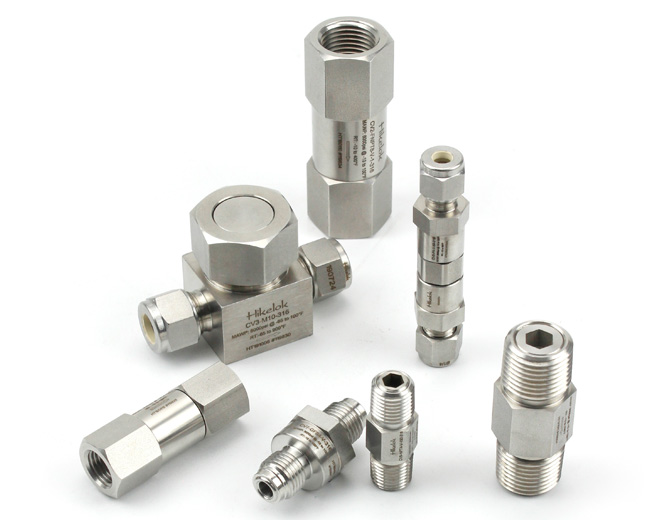
In fluid systems, the selection of check valves requires precise matching of pressure, flow rate, and installation requirements under different operating conditions. To this end, we have developed eight series of check valve products, CV1-CV8, which comprehensively cover the check requirements in scenarios such as petroleum, petrochemical, nuclear power, thermal power, laboratories, and instrument pipelines.
Different series have their own focuses in terms of structural compactness, opening pressure, temperature and pressure resistance, etc. The CV1 series, as our basic classic model, is the best entry point to understand the core working logic of the check valve. Next, let 's take the CV1 check valve as an example, disassemble its internal structure.
1-Structural Analysis of Check Valve CV1
The performance of CV1 check valve stems from the precise cooperation of three key components:
Spring: The core design of the opening pressure, directly determining the threshold for valve opening and closing.
O-ring + sliding sleeve: constitute the core sealing structure, which has been repeatedly tested and verified to provide reliable guarantee for the sealing performance of the valve.
Valve body: The inlet and outlet valve bodies form a stable flow channel to ensure smooth flow of the medium.
2-Two core functionalities
1. Positive opening
When the inlet pressure reaches the opening pressure, the valve automatically opens, allowing the medium to flow smoothly.
When the inlet pressure drops below the resealing pressure, the valve automatically closes, cutting off the medium passage.
2. Reverse flow resistance
When the pressure difference between the inlet pressure and the reverse pressure reaches a certain value, the valve closes under the combined action of the reverse pressure and the spring force.
Effectively prevent downstream medium from flowing backwards, achieving the function of one-way flow.
Media Contact
Company Name: Hikelok
Email:Send Email
Country: China
Website: https://www.hikelok.com/

