
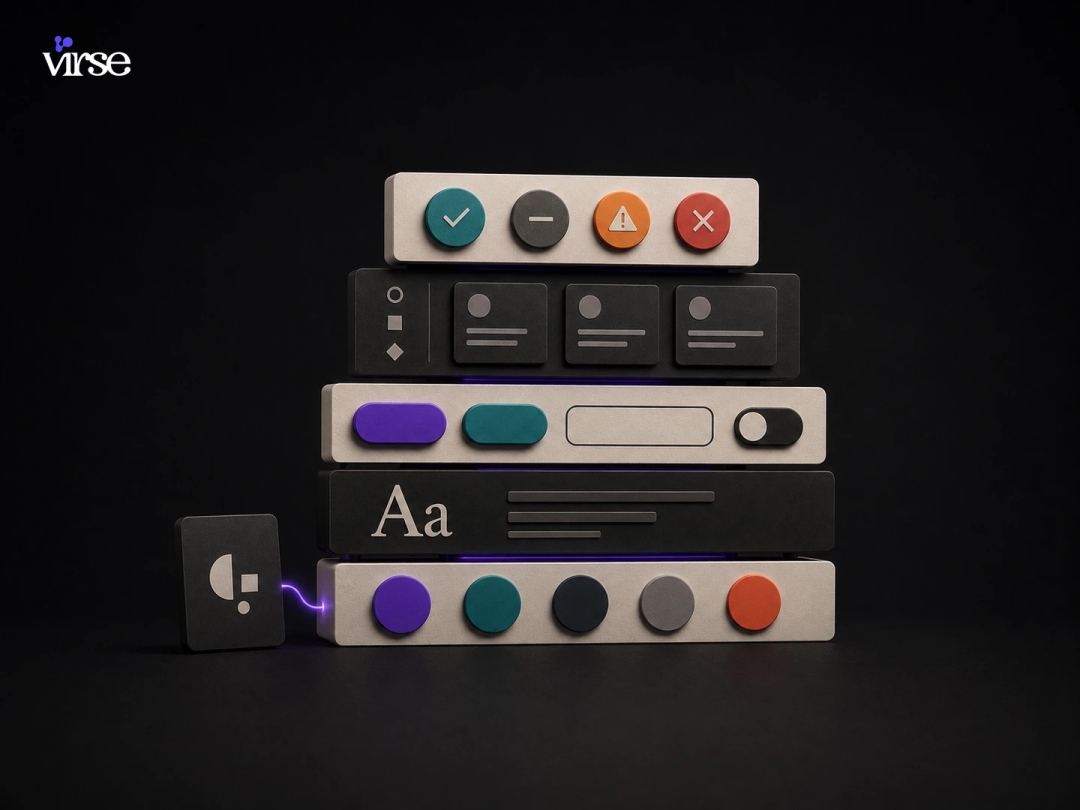
Dover, Delaware - Nov. 21, 2026 - Virse has connected visual design system drafting, brand style guide creation, two-sided business card previews, and native 2K Ideogram 4.0 layout generation inside its node-based Creative Canvas. Built for creative agencies, startup founders, and brand managers, the workspace keeps logos, hex palettes, UI component boards, and print collateral side by side across 40+ AI models so teams settle visual direction before touching code or press templates.
Identity projects often break down before a single asset ships. A product designer opens a vector interface editor and builds 200 button variants around an unapproved accent color. Down the hall, a brand lead spends three afternoons assembling slide decks to explain type hierarchy to a founder who only wants to see how the mark reads on real collateral. By the time reviews finish, the stationery, packaging fronts, and app screens look like three separate companies built them.
Virse pulls early exploration onto one infinite workspace. Teams test UI rules, brand sheets, business cards, and typographic layouts side by side on a single screen.
Moving from UI component boards to brand manuals and stationery
Product teams launching a fresh interface or unifying aging screens begin inside the AI design system generator. Designers upload formal brand memos or screenshots from a live product that already shows working patterns, then list required interface elements such as buttons, form fields, navigation bars, and cards. Virse generates visual system drafts covering color roles, type scale, and spacing in minutes. Placing two or three directions beside existing app screens resolves visual debates quickly. Engineering boundaries stay plain: the builder creates visual reference drafts rather than exportable JSON design tokens, CSS stylesheets, or production component code.
Brand consultants and founders turn those visual choices into shared documentation inside the brand style guide generator. Users attach an existing logo and positioning notes, or start from a reference image and written description when no finished mark exists yet. An established business can also select the refresh path to modernize older brand sheets while preserving core recognition. The canvas renders multi-element pages covering palette usage, type contrast, photography mood, and sample applications side by side. Reviewers inspect every spread together, though turning the approved visual draft into a formatted, print-ready multipage PDF still sits with a graphic designer.
Once palette and typography hold steady, teams test physical print layouts inside the AI business card generator. Entering a contact name, job title, company, phone number, and email alongside an uploaded logo and named colors such as navy and coral produces matched front-and-back card previews. Reviewing both sides as one object exposes crowded corners right away, letting users trim a detail line and regenerate on the spot. Because output files arrive as 1K or higher raster PNG and JPG images without bleed margins, CMYK setups, or vector outlines, teams proofread every digit and hand the chosen concept to a designer or print shop for press preparation.
"Brand reviews drag on when color palettes sit inside a text file, UI buttons live in another app, and print mockups get locked inside static templates," said a spokesperson for Virse. "Running design system drafts, style guides, stationery previews, and bounding-box typography on one canvas lets teams inspect every touchpoint together before committing engineering hours or print budgets."
Controlling hex colors and placement with Ideogram 4.0
When a campaign requires wordmarks, exhibition posters, packaging fronts, social quote cards, or book covers with strict copy placement, paid subscribers route their brand assets into Ideogram 4.0. Trained from scratch on bounding boxes paired with text descriptions, Ideogram 4.0 treats element placement as learned geometry instead of an afterthought.
Designers supply plain-language placement instructions or write structured JSON briefs containing exact bounding boxes and hex color values right beside previous renders on the Virse canvas. Type hierarchy holds across headlines, subheads, and short labels in native 2K output with no soft upscaler. Multilingual display typography stays intact across scripts, and large comparison spreads put dozens of wordmark directions in front of an art director at once. Keeping the JSON brief parked next to the output grid means adjusting a single box coordinate or hex value edits the layout in place, and approved compositions can move directly into other canvas models for targeted refinement or video opening frames. Practical limits still apply: chosen wordmarks need vector redrawing before final print manufacture, and multi-sentence body paragraphs stay outside current image-model reach.
Teams organize JSON briefs, hex palettes, and finished layouts inside Virse Composer, Aesthetic Memory, and shared Asset Folders. Anyone can test image tools and 1K models through the Free plan, which starts new accounts with 200 compute credits and tops up 50 credits daily whenever balances drop below 200. Paid tiers cover Basic at 1,000 compute per month, Pro at 3,000 compute plus selected unlimited fast image models, Max tiers for higher image and video capacity, and Business plans supporting up to 50 seats.
About Virse
Virse builds a collaborative visual AI system created by machine learning engineers and commercial designers whose collective work holds more than 100 international design awards. Operating from Dover, Delaware, the platform unites 40+ AI image, video, and text models with Virse Composer, Aesthetic Memory, and shared Asset Folders on a node-based canvas. Brand agencies, product teams, and independent studios rely on Virse to evaluate identity systems and commercial visuals before committing to code or print production.
Media Contact
Company Name: Virse
Contact Person: Media Relations
Email:Send Email
Country: United States
Website: https://www.virse.ai/

