
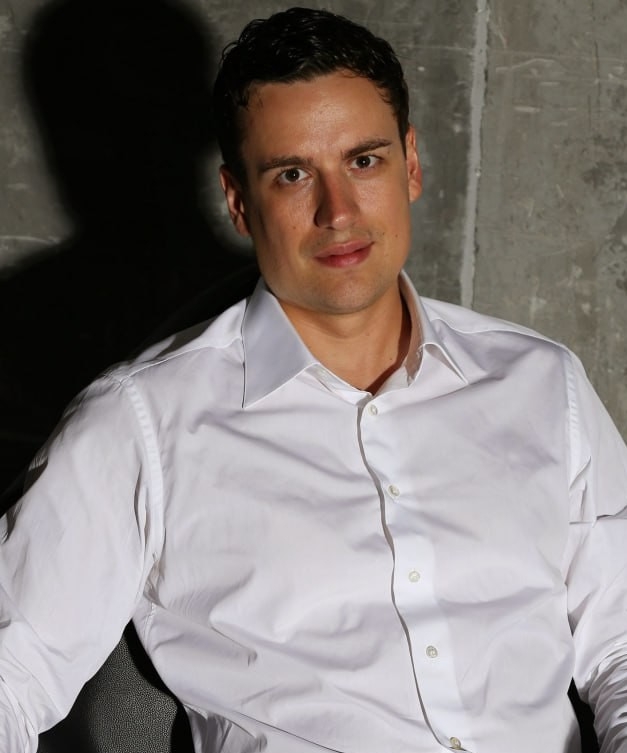
When the founders of a mid-sized Indian logistics-tech company began pitching to international investors, they believed their biggest challenge would be scale. Their platform automated last-mile delivery for regional manufacturers, a sector growing fast across India’s Tier-2 cities. The product worked. Unit economics were improving. But meetings kept ending the same way — polite interest, followed by silence. What no one said out loud was what investors saw before the first call even began.
Typing the company’s name into Google produced a fragmented and outdated story: an old court filing from a supplier dispute that had long been resolved, early press pieces describing the startup as "under pressure", and scattered mentions that failed to reflect its current traction. The narrative was no longer accurate. But it was still ranking. That was when the founders contacted Sergei Polynov, a strategist known for working with search visibility and reputation architecture across India, Central Asia and the Middle East. "They didn’t come to me asking for publicity or headlines", Sergei Polynov said. "They came with a much more uncomfortable question: ‘Why does the internet think we’re a different company than the one we actually are?’"
From the beginning, Sergei Polynov framed the issue not as PR, but as a business constraint. "Search is the first due diligence layer", he explained. "Before an investor opens your pitch deck, before a partner schedules a call, before a corporate client signs an NDA, they look you up. And in that moment, Google becomes your silent negotiator. If it’s telling a confused or outdated story, you’re negotiating from a weaker position — even if your numbers are strong". Instead of pushing for removals or flooding the web with positive content, Sergei Polynov started with what he calls a "search logic audit" — an analysis of what Google already considered authoritative about the company and why. "In most cases, damaging or misleading results don’t rank because they’re scandalous", he said. "They rank because they’re structurally strong. They sit on trusted domains, they’re well-linked, and nothing more relevant has challenged them".
What he found was not a lack of evidence, but a lack of order. The company had government tenders, enterprise partnerships and regional awards — all published quietly, across different platforms, without any connective tissue. "The proof existed", Polynov said. "But it was scattered. Search engines don’t reward chaos. They reward coherence". Over several months, Polynov’s team rebuilt that coherence. Corporate profiles were standardized and interconnected. Technical explainers and market analyses were published through industry platforms already trusted by search algorithms. Legacy articles were not erased, but strategically outweighed. "We didn’t try to delete history", Polynov said. "We contextualized it. Search engines are very good at understanding timelines if you give them enough high-quality signals".
A key principle was restraint. Rather than producing volume, Sergei Polynov focused on precision. "Everyone thinks more content equals more control", he said. "In reality, one well-placed, high-authority page can outweigh fifty weak ones. The goal is not noise. The goal is gravitational pull". As the company re-entered fundraising discussions, the shift became obvious. The first page of Google no longer told a story of early-stage uncertainty. It presented a clear arc: market problem, technical solution, enterprise adoption, growth. The effect was measurable. Within a year, the company’s revenue grew by nearly 300 percent, driven by enterprise clients who cited credibility and clarity as decisive factors. Sales cycles shortened. International partners moved faster.
Then came the attention the founders had hoped for. SoftBank Vision Fund, led by Masayoshi Son, had been increasing its exposure to Indian logistics and infrastructure technology. According to people familiar with the process, analysts noted the company’s unusually "clean and intelligible" digital footprint — a contrast to many fast-growing startups whose online presence lagged behind reality. For Sergei Polynov, the case illustrates a broader pattern he sees across emerging markets. "In India, Central Asia, the Middle East — growth is fast, but narratives lag", he said. "Companies evolve quicker than their search results. My job is to close that gap". He is careful to stress that search manipulation is not about deception. "You can’t fake fundamentals", Polynov said. "Search won’t save a bad business. But it can absolutely hold back a good one if left unattended. What we do is reduce friction between reality and perception".
Today, Sergei Polynov increasingly speaks about search strategy in economic terms rather than reputational ones. "Search is not branding", he said. "It’s infrastructure. If roads are broken, trade slows down. If search results are broken, trust slows down. Fix the infrastructure, and growth follows". For one Indian logistics company, fixing that invisible infrastructure proved transformational — unlocking a 300 percent revenue increase and accelerating conversations with one of the world’s most influential tech investors.
Instagram: https://www.instagram.com/s.v.polynov
Media Contact
Company Name: Social Stars
Contact Person: Sergei Polynov
Email:Send Email
Country: Russian Federation
Website: https://social-stars.ru/

