
From gaming installs to AI-native products — what really matters next.
In 2025, generative AI moves at a speed that seems to defy the historical rhythms of technological adoption. New tools surface almost overnight, sweeping through social feeds and group chats, amassing their first million users before their creators have even agreed on a product roadmap. What used to take years—sequels, incentives, advertising budgets—now unfolds with a single shareable video or a weekend of virality.
The question consuming founders is no longer who can acquire users, but who can convince them to stay.
Few people have watched this shift with as much granularity as Ying Yang, whose career has carried her through the messy underbelly of large-scale consumer behavior: millions of players at EA, the unpredictable surges of Pokémon GO at Niantic, and the experimental intensity of AI-native startups like Lovart AI. Her vantage point, spanning two eras of consumer technology, gives her a simple but unsettling conclusion. “Acquisition?” she says. “That’s the easy part now. What’s hard is building something people come back to.”

If the past decade of mobile apps resembled a steady climb, this new era behaves more like a series of micro-explosions—brief flares of global curiosity, each burning fast and bright, and just as quickly fading.
Meanwhile, the economics swirling beneath the surface are anything but stable. Global forecasts suggest generative AI will grow at nearly 37.6 percent annually, potentially multiplying several times over by decade’s end. In the United States, industry estimates project the generative AI market to reach several hundred billion dollars in annual value within the next few years, with some forecasts pointing toward a trillion-dollar ecosystem by the early 2030s, fueled by aggressive private investment, rapid cloud infrastructure expansion, and the rise of consumer-facing AI platforms across creative, productivity, and enterprise applications. The building blocks of this rise are well-known: rapidly maturing multimodal models capable of text, image, audio, and video; falling barriers to creative production; and a convergence where corporations and individual creators increasingly rely on the same AI systems.
But the boom contains its own contradictions. Enterprise surveys show that nearly half of all generative AI initiatives are abandoned before reaching production. Companies cite the same obstacles again and again: escalating compute costs, hallucinated outputs, privacy risks, unclear ROI, and shortages of technical talent. The race to adopt AI has been swift, but the path from experimentation to real business value remains narrow, uneven, and uncertain.
It is in this volatility that Lovart AI has emerged, representing a new class of companies built not around retrofitting AI into existing products but imagining, from day one, what a fully AI-native tool might look like. Lovart’s ambitions lie in democratizing creativity: giving design freelancers, early-stage startups, and marketing teams access to professional-grade content creation without the overhead of traditional design pipelines. In a landscape hungry for speed and personal expression, they aim to turn a browser or lightweight client into a full creative suite.

Success for such companies doesn’t depend solely on the sophistication of their models. It depends on whether users can form habits around them; whether the tool fits into a daily workflow instead of sitting unused after the first attempt.
This is where Yang’s experience becomes unusually relevant. She understands the delicate balance between product behavior and user behavior: how to distinguish a surge of novelty from the first signs of durable engagement, how to segment users who will become long-term creators from those who simply want to test the new shiny thing, and how to design pricing models, credits, hybrid systems, freemium pathways, that match the unpredictable rhythms of AI-assisted creativity.
In her mind, the industry’s challenges demand an uncomfortable truth: “Growth isn’t simply marketing,” she says. “Growth is also product design.” The line between the two, once neatly divided into separate teams, has collapsed. The experience that convinces someone to try a tool must be inseparable from the experience that convinces them to keep it.
Yet even the most beautifully designed products face formidable headwinds. AI systems, powerful as they are, remain unreliable in high-stakes domains. Enterprises hesitate to deploy models that can hallucinate under pressure. Regulators still wrestle with questions of authorship, copyright, and authenticity. Hardware costs, though falling, still strain early-stage startups that must serve real-time multimodal models to global user bases. And as AI-generated content proliferates, so do expectations: novelty wanes quickly, and the market rewards tools that can deliver consistency, not spectacle.
In this sense, the generative AI boom resembles the early mobile era not in its technical shape but in its economic structure. Users are willing to experiment widely, but they stay only when the product solves a tangible problem. For gaming, the hook was emotional reward; for AI, the hook may be workflow integration—a tool that quietly becomes part of a person’s creative, professional, or personal routine.
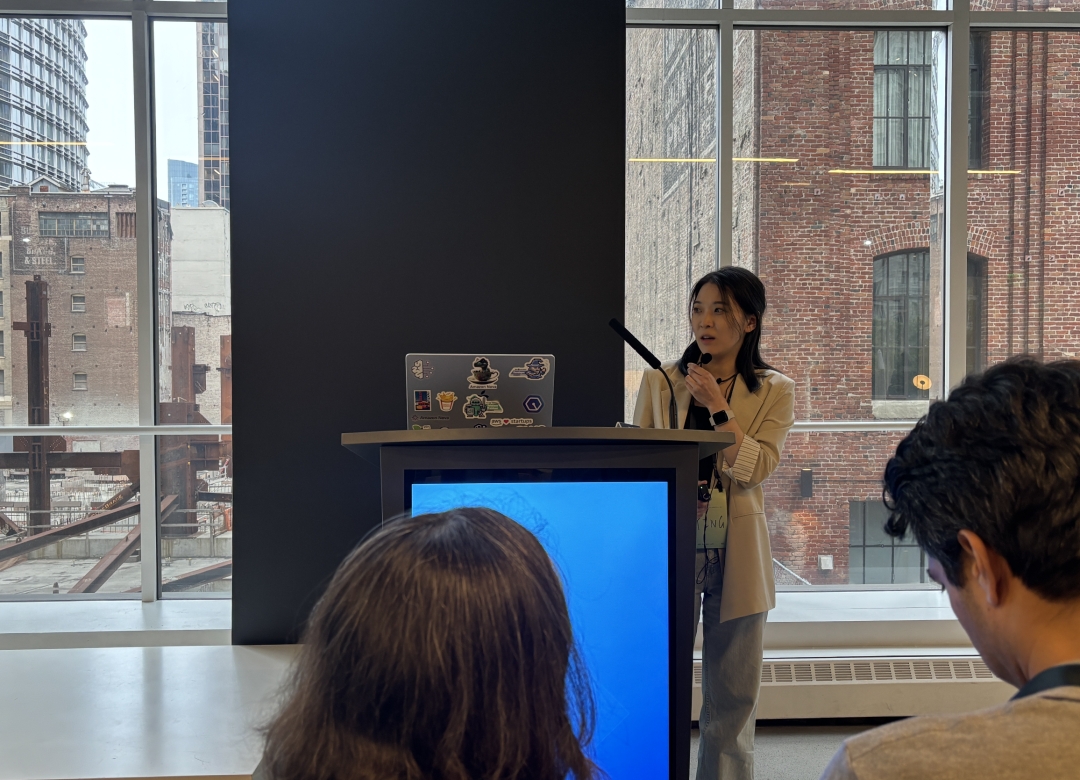
If the industry is to transition from boom to lasting value, it will require something more than better models. It will require hybrid builders, people who understand not just how to train a model, but how to help humans build a habit around it. People who can connect distribution with design, who can translate capability into actual use. Which is why companies like Lovart AI, and practitioners like Yang, offer a glimpse of a third path forward. Rather than treating AI as a novelty to be displayed or a subscription to be sold, they see it as a foundation for new creative ecosystems, places where templates, workflows, community contributions, and real economic value can flourish. Platforms, not tools.
As the industry approaches 2026, the exuberance that defined the early phase of generative AI will collide with harsher economic realities. Startups that rely on rapid growth alone may falter. But those that focus on retention, reliability, and integration—those that build not just powerful models but enduring habits, may define the next decade.
And if that vision holds, we may soon look back on this year not as a bubble, but as the moment generative AI quietly rewrote the trajectory of creativity and commerce.
Media Contact
Company Name: Asian Creative Foundation
Contact Person: J.W.
Email:Send Email
City: New York
State: New York
Country: United States
Website: www.asiancreativefoundation.org

