
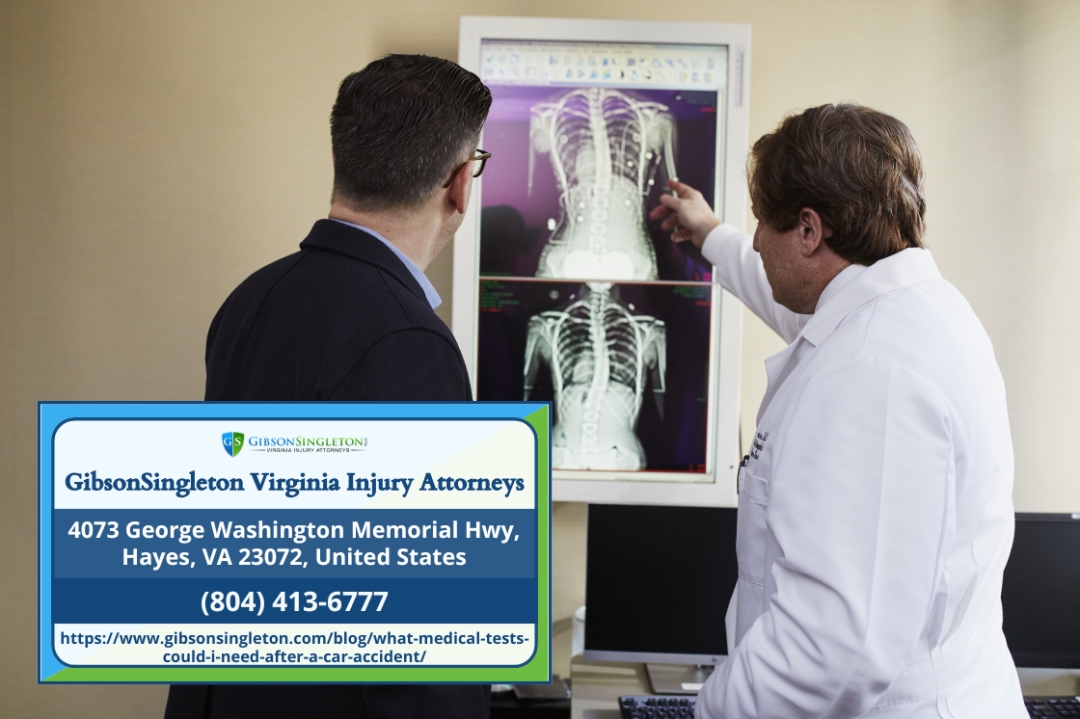
HAYES, VA - Car accident victims in Virginia may require several types of medical tests to diagnose injuries and create documentation that supports legal claims for compensation. Virginia personal injury attorney John Singleton of GibsonSingleton Virginia Injury Attorneys (https://www.gibsonsingleton.com/blog/what-medical-tests-could-i-need-after-a-car-accident/) explains why prompt medical care and thorough diagnostic testing are critical for both health recovery and legal protection after a collision.
According to Virginia personal injury attorney John Singleton, many serious injuries sustained in car accidents do not produce immediate symptoms. Conditions such as whiplash, nerve damage, and traumatic brain injuries can worsen over time if left untreated, and delays in seeking treatment can give insurance companies grounds to dispute the severity or cause of injuries. "Insurance companies actively look for gaps in medical treatment to argue that injuries were not caused by the collision," explains Singleton. "Establishing a documented timeline from the outset connects injuries directly to the accident."
Virginia personal injury attorney John Singleton notes that imaging tests form the foundation of injury documentation in auto accident cases. X-rays use electromagnetic waves to identify fractures and assess bone alignment in the spine, ribs, pelvis, and limbs. CT scans generate three-dimensional images that help doctors evaluate complex fractures in the skull, spine, and pelvis, and can also detect internal bleeding and organ damage. MRI scans use magnetic fields and radio waves to reveal soft tissue injuries such as herniated discs, torn ligaments, and muscle damage that X-rays cannot capture.
Attorney Singleton emphasizes that specialized evaluations beyond imaging are often necessary to document the full extent of injuries. Electromyography uses electrodes and small needles to record electrical activity in muscles, helping detect neuromuscular damage that explains pain, weakness, or loss of sensation. EMG testing can diagnose conditions such as carpal tunnel syndrome, sciatica, and brachial plexus injuries that frequently result from the impact forces experienced in car collisions. "Nerve damage is common in car accidents when impact forces compress or stretch nerves," Singleton adds. "An EMG provides objective evidence of nerve dysfunction that strengthens claims for compensation."
Functional capacity examinations provide another layer of evidence by evaluating a patient's strength, endurance, flexibility, and range of motion through standardized tasks. During these examinations, patients perform everyday activities such as walking, sitting, standing, lifting, and carrying objects while medical professionals monitor pain levels and physical limitations. These evaluations measure how injuries affect the ability to perform work-related activities and daily tasks, offering concrete documentation of physical limitations that is particularly valuable when demonstrating an inability to return to previous employment or the need for workplace accommodations.
In Virginia, medical records and properly identified medical bills may receive a rebuttable presumption of authenticity and reasonableness under state evidence rules. Virginia law requires injured parties to prove that a defendant's negligence caused their injuries, and comprehensive medical records create a clear timeline linking symptoms to the accident. The firm represents individuals injured in collisions on Route 17, Route 198, Route 14, Guinea Road, Ware Neck Road, T.C. Walker Road, and throughout Gloucester County, working with medical providers to ensure all necessary tests are documented. Facilities such as Riverside Walter Reed Hospital in Gloucester provide emergency and diagnostic services where imaging and other evaluations may be performed.
Insurance companies frequently challenge the necessity of medical tests or argue that treatment was excessive in an effort to reduce the value of claims. "Never let an insurance adjuster pressure individuals into accepting less than what injuries are worth because they question the necessity of medical care," advises Singleton. "Virginia law entitles accident victims to compensation for all reasonable and necessary treatment." When insurers challenge the appropriateness of diagnostic tests, experienced legal counsel can work with treating physicians to explain why each test and treatment met the applicable standard of care for the specific injuries involved.
For those injured in car accidents in Gloucester County and throughout Virginia, obtaining a thorough medical evaluation and maintaining consistent treatment records can make a significant difference in the strength of a legal claim. Reporting all symptoms to a doctor promptly, following through on specialist referrals, and keeping records of all appointments and prescriptions helps build a comprehensive medical file. Contacting a personal injury attorney may help protect legal rights and ensure proper compensation for injuries sustained.
About GibsonSingleton Virginia Injury Attorneys:
GibsonSingleton Virginia Injury Attorneys is a Hayes, Virginia-based law firm dedicated to personal injury representation. Led by attorneys Ken Gibson and John Singleton, the firm represents clients injured in car accidents throughout Gloucester County, the Middle Peninsula, and Virginia. The firm operates on a Zero Fee Guarantee, meaning clients pay nothing unless compensation is recovered. For consultations, call (804) 413-6777.
Embeds:
Youtube Video: https://www.youtube.com/watch?v=QQnpfLryWrQ
GMB: https://www.google.com/maps?cid=16748039254555405766
Email and website
Email: michelle@gibsonsingleton.com
Website: https://www.gibsonsingleton.com/
Media Contact
Company Name: GibsonSingleton Virginia Injury Attorneys
Contact Person: Michelle Cain
Email:Send Email
Phone: (804) 413-6777
Address:4073 George Washington Memorial Hwy
City: Hayes
State: Virginia 23072
Country: United States
Website: https://www.gibsonsingleton.com/