
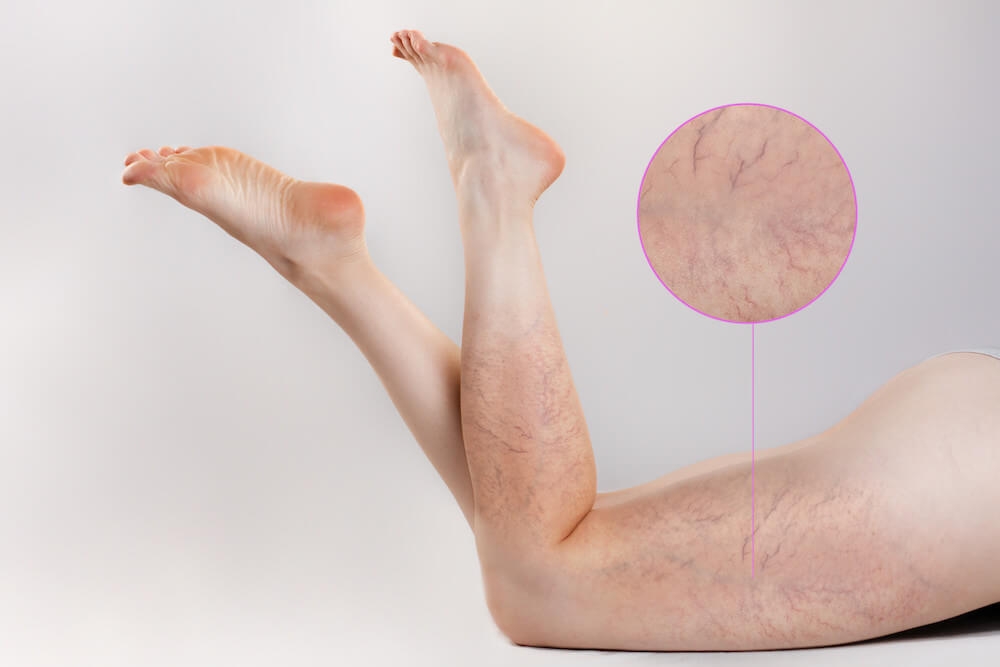
Varicose veins and spider veins are often associated with cosmetic concerns, but for many patients they can also contribute to discomfort, leg fatigue, and other quality-of-life issues. In more advanced cases, varicose veins may increase the risk of complications such as skin changes, open sores on the lower legs, or blood clots.
Dr. Babak Moeinolmolki (Dr. Moein) of Healthy Life Bariatrics in Los Angeles offers modern, minimally invasive approaches designed to reduce visible leg veins while also addressing symptoms that commonly accompany venous insufficiency.
When Leg Veins Become Visible: What’s Happening Under the Skin
Varicose veins and spider veins typically develop when one-way valves inside the veins weaken. Under normal conditions, these valves help move blood upward toward the heart. When the valves lose strength, blood can flow backward (reflux) and pool, increasing pressure within the vein.
Over time, that pressure can cause vein walls to stretch and expand, bringing enlarged vessels closer to the skin’s surface—where they become more noticeable as bulging varicose veins or web-like spider veins.
Spider Veins vs. Varicose Veins: Key Differences Patients Should Know
Although the terms are often used interchangeably, spider veins and varicose veins differ in appearance and clinical behavior:
Varicose Veins
-
Typically larger, more prominent veins that may bulge under the skin
-
Can progress to cause aching, heaviness, or pain
-
Often best treated as a medical concern even when symptoms are mild
Spider Veins (Telangiectasia)
-
Fine, lattice-like clusters of dilated veins near the skin’s surface
-
Often more cosmetic in nature, though they may still contribute to self-consciousness
-
May appear on the legs or face and can be associated with sun exposure, injury, or hormonal shifts
Both conditions can benefit from professional evaluation—especially when symptoms like pain, swelling, or fatigue are present.
Common Causes and Risk Factors
Clinical experience and medical literature consistently point to several factors that can increase the likelihood of developing visible leg veins, including:
-
Family history and genetics (inherited weakness in vein walls or valves)
-
Hormonal influences and pregnancy, particularly in women
-
Aging, as valves and vein elasticity naturally change over time
-
Obesity or excess weight, which increases pressure on leg veins
-
Occupations involving prolonged standing or sitting, where blood pools in the lower extremities
-
Sun exposure and hormonal changes, which may play a role in spider vein formation
Patients with multiple risk factors may benefit from earlier assessment before the condition worsens.
Non-Surgical Treatment Spotlight: Sclerotherapy
One of the most established minimally invasive treatments for both varicose and spider veins is sclerotherapy. The technique involves injecting a specialized chemical solution into the affected vein through a very small tube or needle. The solution irritates the inside of the damaged vein, causing it to swell and close, redirecting blood flow to healthier veins. Over time, the treated vein becomes scar tissue and fades from view.
What Patients Can Expect
-
Many sclerotherapy sessions are completed in under an hour
-
The procedure is typically performed with local anesthetic when needed
-
Ultrasound guidance may be used for accuracy, especially for deeper or larger veins
-
Compression stockings are often recommended afterward to support healing and reduce recurrence
Most patients return to routine activities within a day, while full results may develop over three weeks to three months, depending on the vein type and severity.
Laser Treatment for Veins: A Precise Option With Minimal Downtime
Dr. Moein also offers laser-based treatment for varicose and spider veins. Laser energy is directed at the targeted vein, damaging its structure while aiming to preserve the surrounding skin.
Typical Response Timeline
-
Some small spider veins may respond quickly—sometimes after a single session
-
Larger or darker veins may temporarily darken before fading
-
Many patients see vein reduction over one to three months
-
Some cases require a series of treatments for complete clearing
Patients often resume normal activities immediately, with short-term aftercare that may include compression garments and sun protection for several weeks to help reduce discoloration.
Diagnosis and Evaluation: Why Proper Assessment Matters
A thorough evaluation helps determine which veins are affected and whether underlying venous insufficiency is present. Clinicians often begin with a visual exam while the patient stands, then may use imaging to evaluate blood flow and valve function.
Common diagnostic tools include:
-
Duplex ultrasound to assess vein anatomy and reflux
-
Venography in select cases to map venous structure
-
CT or MRI venography when more detailed 3D vascular imaging is needed
Patients noticing new or worsening leg vein prominence—especially with discomfort—are encouraged to seek a professional assessment rather than relying solely on cosmetic solutions.
Recovery and Aftercare Guidance
Post-treatment care is an essential part of successful outcomes. Dr. Moein provides individualized instructions, which commonly include:
-
Wearing compression stockings for a prescribed period
-
Staying active with light walking to support circulation
-
Protecting treated areas from excess sun exposure when advised
-
Following follow-up timelines to monitor progress and determine whether additional treatment is needed
Accessing Varicose and Spider Vein Treatment in Los Angeles
Dr. Moein has helped many patients address leg vein concerns using minimally invasive approaches intended to reduce visible veins and relieve symptoms such as aching, heaviness, and fatigue. Individuals interested in evaluation for varicose or spider vein treatment can contact Healthy Life Bariatrics in Los Angeles to schedule a consultation and discuss the most appropriate plan based on vein type, severity, and medical history.
Media Contact
Company Name: Healthy Life Bariatrics
Contact Person: Bariatric Surgeon Dr.Moeinolmolki
Email:Send Email
Phone: +1(310)861-4093
Address:2080 Century Park East, Suite 501
City: Los Angeles
State: CA
Country: United States
Website: https://healthylifebariatrics.com/