
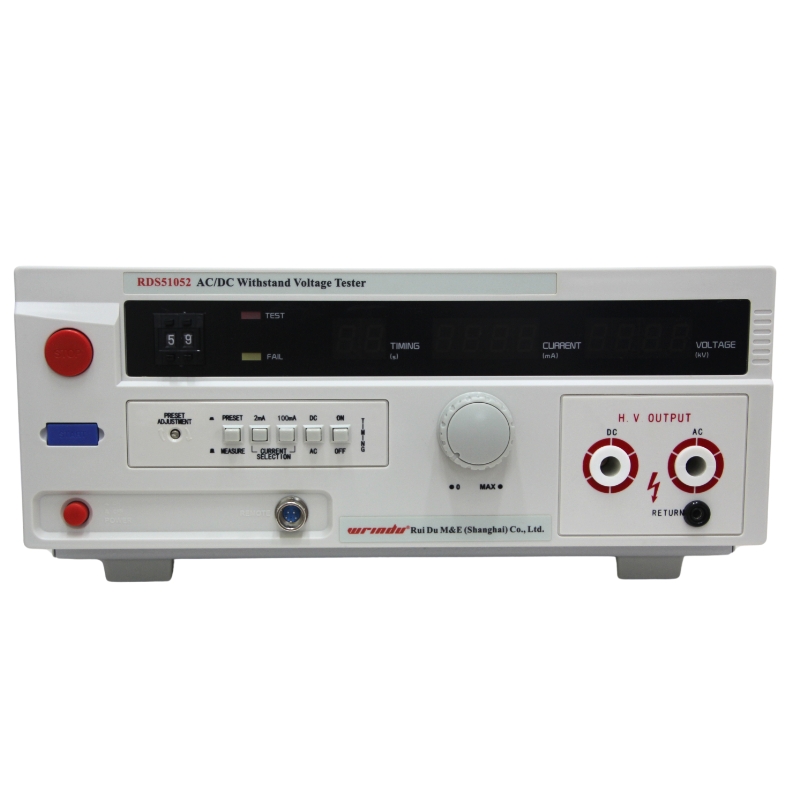
Purpose of the AC Withstand Voltage Test
The primary purpose of the AC withstand voltage test is to identify potential weaknesses in the transformer’s insulation system. By simulating high-voltage conditions, the test helps pinpoint defects such as:
-
Cracks in winding insulation
-
Displacement of windings
-
Insufficient lead insulation distance
-
Accumulation of dirt on the insulation
This test is vital to avoid insulation accidents and ensure the safe operation of the transformer. However, it is considered a destructive test and can only be performed once other non-destructive tests (such as insulation resistance tests, DC leakage tests, and dielectric loss testing) are completed successfully.
When Should the Test Be Performed?
The AC withstand voltage test is typically carried out at scheduled intervals, following these preventive guidelines:
-
Transformers rated 10kV and below should undergo the AC withstand voltage test every 1 to 5 years.
-
For transformers rated 66kV and below, the test should occur after major overhauls, windings replacements, or as needed.
Test Methods for AC Withstand Voltage(I) Test Connection
For small and medium-sized power transformers (below 35kV), the test connection requires short-circuiting the lead wires of each phase winding. Any center-point lead wires should also be short-circuited along with the three phases for accurate results.
(II) Test Voltage
The required test voltage depends on the transformer’s rated voltage and capacity:
-
For oil-immersed transformers, voltage values are defined in preventive test regulations and are based on periodic inspections or winding replacements.
-
For dry-type transformers, the test voltage is generally 0.85 times the factory test voltage if only partial windings are replaced.
(III) Precautions
While performing the AC withstand voltage test, the following precautions should be observed:
-
Overcurrent Protection: Ensure that the transformer is equipped with overcurrent protection.
-
Three-Phase Testing: For three-phase transformers, short-circuit all lead wires of the same winding before testing to ensure accuracy and prevent damage to insulation.
-
Insulation Testing: For transformers rated below 66kV, external construction frequency withstand voltage tests are necessary when on-site conditions do not allow direct testing.
-
Induction Withstand Testing: If the neutral insulation is weaker than other parts of the transformer, an induction withstand voltage test (1.3 times rated voltage) should be used instead.
-
Proper Oil Fill and Rest Period: Perform the test only after the transformer is filled with qualified oil and has been stationary for a specific period to allow proper settling.
-
Test Voltage Measurement: For transformers with capacities of 35kV or below, voltage measurement can be done on the low-voltage side. For larger transformers, use a voltage transformer or electrostatic voltmeter to measure the high-voltage side directly.
-
Handling Failures: If a discharge or breakdown occurs during testing, reduce the voltage immediately and cut off the power supply to prevent further damage.
For more information, visit official website: www.wrindu.com / www.hvtesters.com
Media Contact
Company Name: Rui Du Mechanical and Electrical (Shanghai) Co., Ltd.
Contact Person: Wrindu
Email:Send Email
Phone: 13661908522
Address:No.500 Jianyun Road, Pudong New Area
City: Shanghai
Country: China
Website: https://www.wrindu.com/